Revision rhinoplasty in Korea
Revision rhinoplasty, or secondary rhinoplasty, corrects problems from earlier nose surgery, such as a visible or shifted implant, a dropped tip or a nose pulled short by scar tissue. It takes about 2 hours under general anesthesia; the clinic lists no overnight stay. Stitches usually come out on day 7, and most stays in Seoul last 7 to 10 days.
Who is a good candidate for revision rhinoplasty?
- Your implant shows through the skin or has moved off center
- Your nose has become short, pulled up or hard after inflammation or scar tissue
- Your tip has dropped, or a round tip or hump was not corrected the first time
- Your nose looks crooked or your nostrils look uneven after surgery
- Breathing through your nose has become harder since your first surgery
When it may not be the right choice
- Your first surgery was within roughly the last year and there is no infection or exposed implant. Waiting lets swelling settle first
- You cannot stop smoking around the time of surgery. Earlier surgery has already reduced the blood supply to the nose skin, and smoking slows healing further
- You expect a revision to undo every change from earlier surgery. Scar tissue limits what is possible
Which method fits you?
Most revisions combine more than one step. The surgeon plans them after examining your nose, checking how much septal cartilage is left and learning what was done the first time.
| Method | What happens | Suits | Downtime |
|---|---|---|---|
| Implant removal or exchange | The old implant is taken out, along with scar tissue where needed. A new implant or cartilage can go in during the same surgery. | An implant that shows, has shifted, feels hard or has been infected | Splint and stitches out around day 7 |
| Rebuilding with cartilage | Cartilage from the septum, ear or rib rebuilds the tip and bridge, and can lengthen a nose pulled short by scar tissue. | A contracted nose (pulled short or tight by scar tissue), a dropped tip or weak support after several surgeries | Stitches out around day 7, or up to day 10 when ear or rib cartilage is taken. That donor wound heals over the same weeks |
| Shape correction | The tip cartilage is reshaped, and bone can be cut to correct a hump, a wide bridge or a crooked nose. | A round tip, hump or crooked nose that is still there after the first surgery | Splint and stitches out around day 7 |
What happens on the day of revision rhinoplasty?
- Consultation. The surgeon examines your nose inside and out and asks what was done in your first surgery.
- General anesthesia, so you are fully asleep.
- Often through an open approach, the surgeon releases scar tissue, removes or replaces any implant and rebuilds support with cartilage where needed. The operation runs for about 2 hours.
- A splint goes on and you recover from general anesthesia at the clinic. The clinic lists no overnight stay, but ask whether you should stay the night if rib cartilage is taken.
What is recovery like after revision rhinoplasty?
- Days 1 to 3
- The splint is on, with swelling and bruising. If rib cartilage was taken, your chest is sore when you move or breathe deeply.
- Days 7 to 10
- Stitches come out and the splint comes off, usually on day 7, or up to day 10 if ear or rib cartilage was taken. The clinic lists about a week to get back to daily life, so ask whether a rib graft makes that longer. The nose still looks swollen and feels stiff.
- Weeks 2 to 4
- Bruising can take this long to fade, and by then most people feel comfortable out in public. Avoid hard exercise and anything that presses on your nose until your surgeon says it is fine.
- Months 6 to 12 and beyond
- Scar tissue softens slowly. After a revision the final shape can take a year or longer.
How long should you stay in Seoul after revision rhinoplasty?
Most revisions fit into 7 to 10 days in Seoul. The splint and stitches usually come off on day 7, the clinic lists 2 to 3 follow-up visits around that, and most people fly on about day 8. If ear or rib cartilage is taken, stitches may not come out until day 10, so plan the full 10 days. After a rib graft, a sore chest also makes a long flight harder. As after any operation, if you become breathless or have chest pain, get emergency care first, then tell the clinic. If rib cartilage is used, soreness at the chest wound that eases day by day is expected, but chest pain that comes on suddenly or gets worse needs emergency care first, then a call to the clinic. A nosebleed that is heavy and does not stop also needs emergency care first, then the clinic. After any of these, do not fly until a doctor says it is safe.
What are the risks of revision rhinoplasty?
- Swelling, bruising and stiffness, which can take a year or more to settle
- Scar tissue that comes back and limits the result, or pulls the nose short again
- Slower healing or thin skin, because earlier surgery affects the blood supply to the nose
- Infection, especially where an infected implant has been removed
- Problems where cartilage is taken: from the rib, chest pain, a chest scar and, rarely, air around the lung; from the ear, soreness
- Warping of a rib graft, which can slowly curve the rebuilt bridge
- Breathing difficulty, asymmetry or the need for another surgery
What affects the cost of revision rhinoplasty in Korea?
A revision rhinoplasty quote follows the repair plan, so no price is listed here; the clinic needs your photos and records first. The quote changes with implant removal or exchange, with how much cartilage is needed and whether it comes from the septum, ear or rib, with whether bone is cut, and with how many operations you have had. Check that the written quote names the surgeon and the cartilage source and covers general anesthesia, the 2 to 3 follow-up visits, the splint and stitch removal.
Cases from the clinic
Before and after photos from Urban Plastic Surgery, shown with the patient’s consent, as the clinic provided them and resized for the web. Results differ from person to person, and the risks above apply to every case.
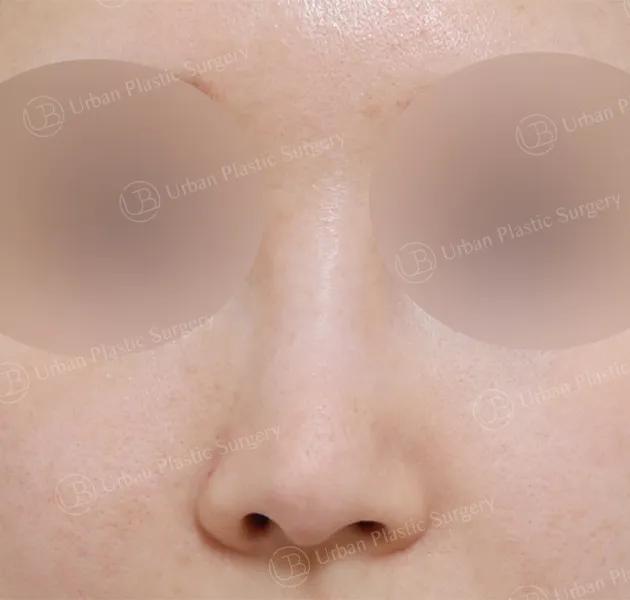
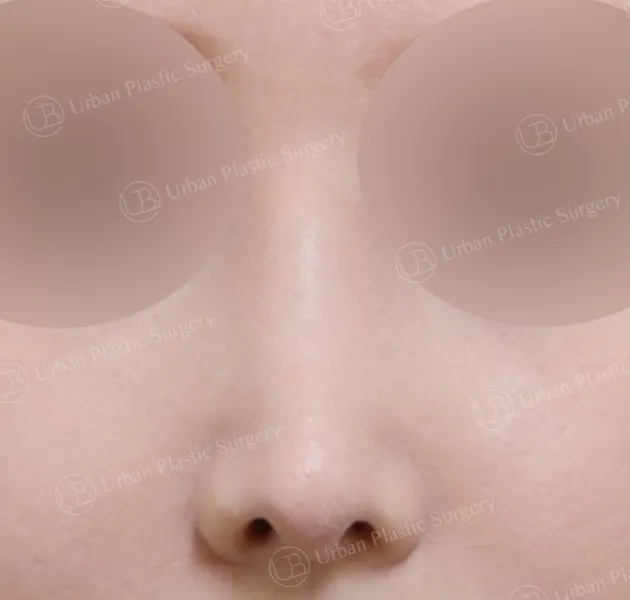
Case FtnSGNose
- Revision
- Foreign material removal
- Bulbous tip
- Nasal bone osteotomy
Urban Plastic Surgery · consent on file
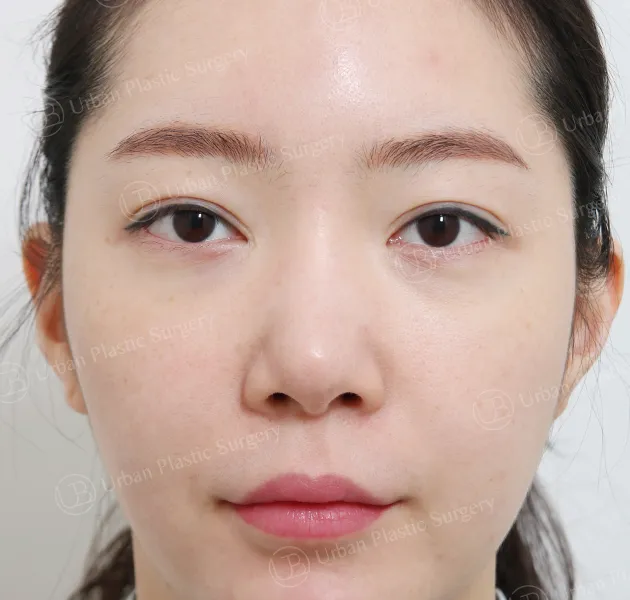
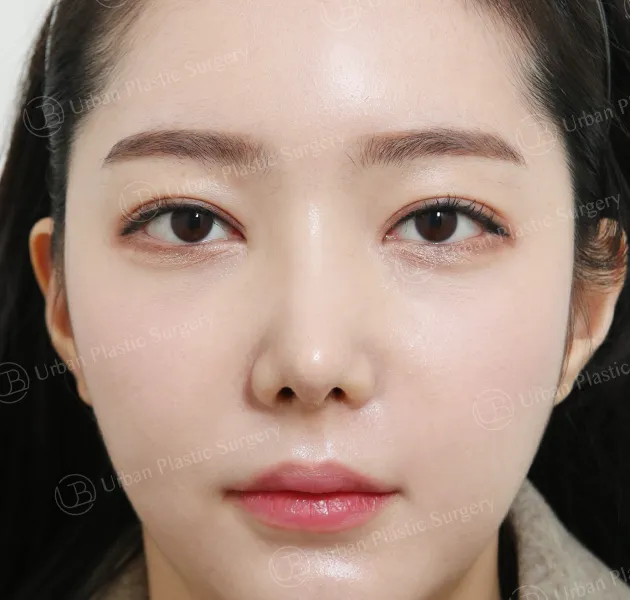
Case tPicDNose
- Nose revision
- Bridge
- Tip
- Bulbous tip
- Nasal bone osteotomy
Urban Plastic Surgery · consent on file
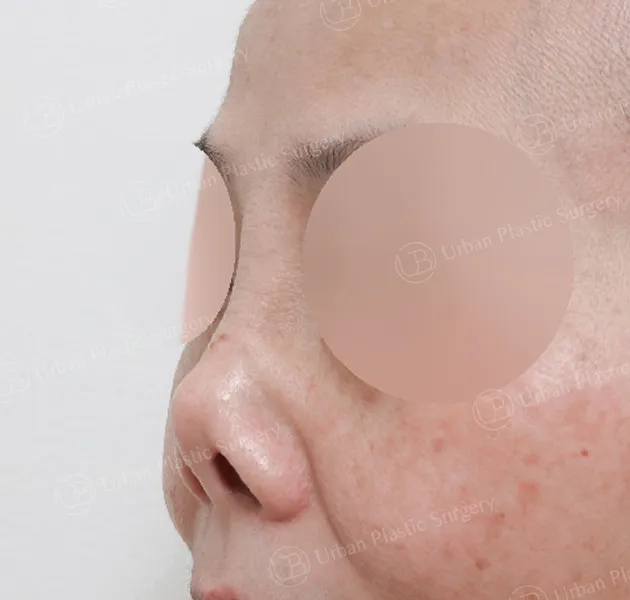
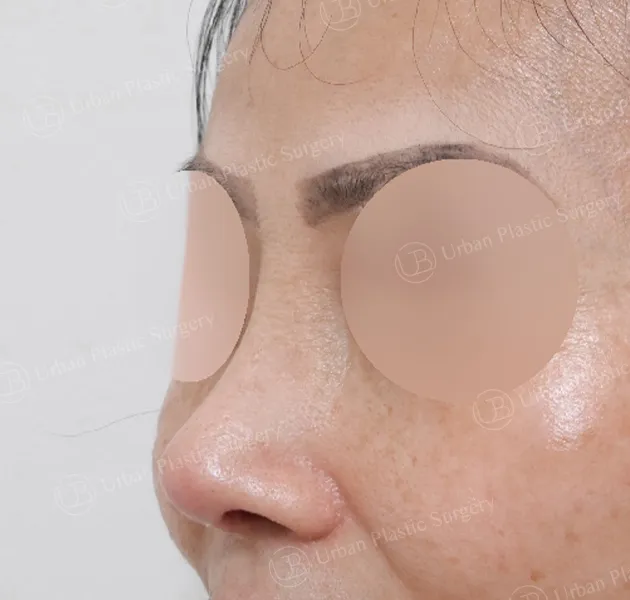
Case J6f4BNose
- Contracted nose
- Revision
Combined with Open rhinoplasty, Implant-free rhinoplasty, Short nose
Urban Plastic Surgery · consent on file
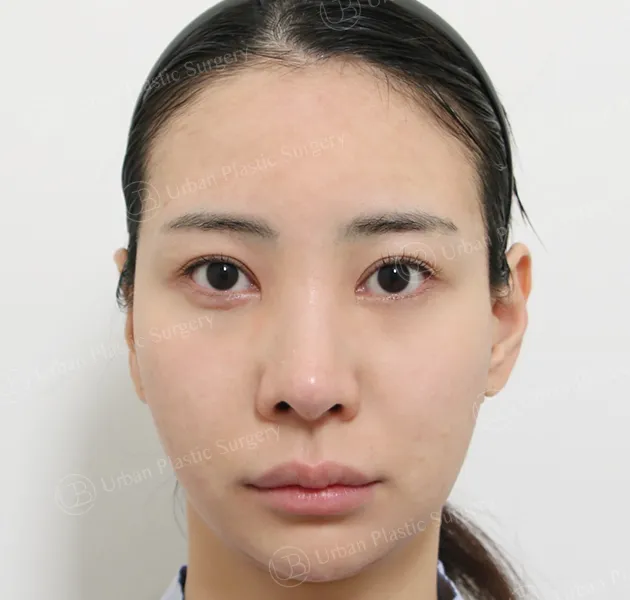

Case Jt64vLifting
- Nose revision
- Bulbous tip
- Nostril reduction
- Nasal bone osteotomy
- Cartilage reshaping
Combined with Philtrum shortening
Urban Plastic Surgery · consent on file
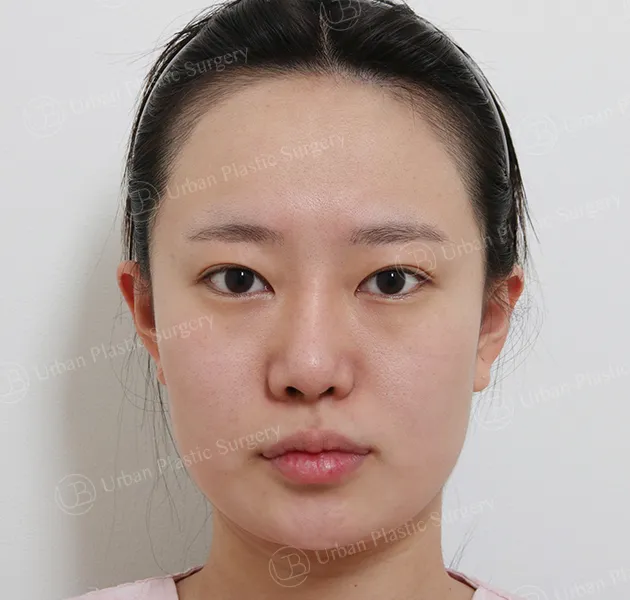
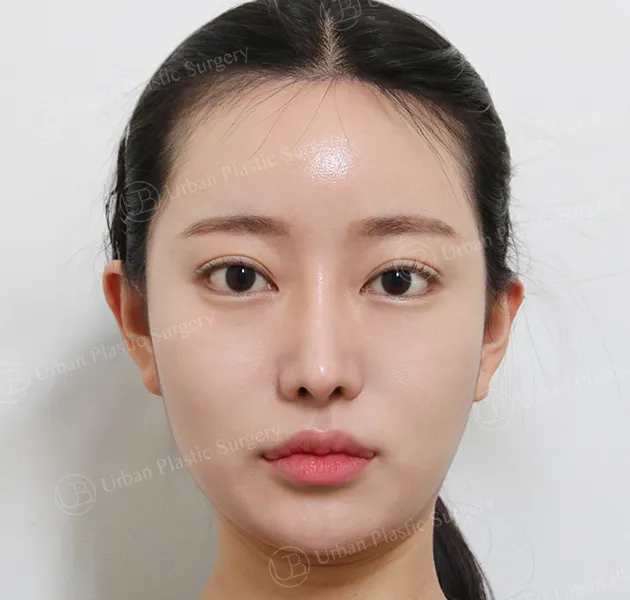
Case DfN3BEyes · Nose · Lifting
- Nose revision
- Bridge
- Tip
Combined with Anti-aging, Forehead reduction, Lift, Liposuction (jawline, above smile lines), Eye revision, Incisional double eyelid, Dual canthoplasty, Bulbous tip, Nasal bone osteotomy, Own rib cartilage
Urban Plastic Surgery · consent on file
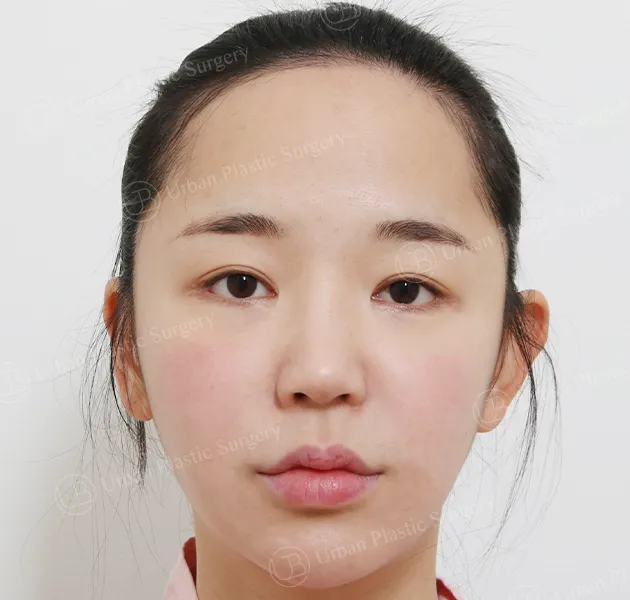
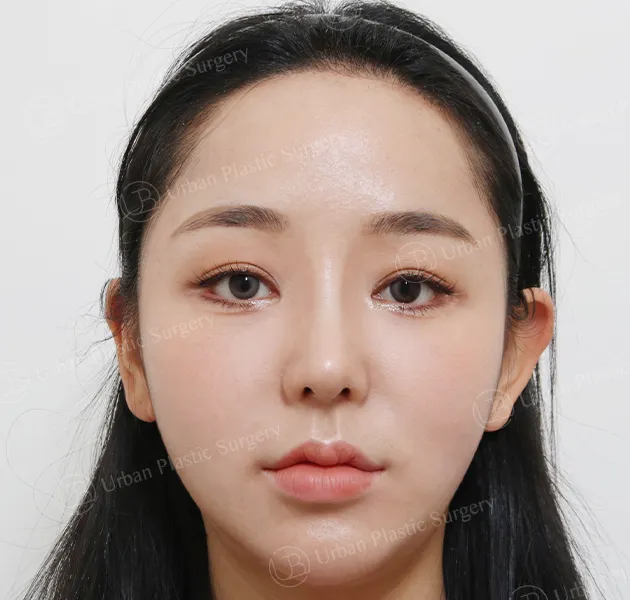
Case ssjEPEyes · Nose · Lifting
- Nose revision
- Bridge
- Tip
Combined with Forehead reduction, Forehead lift, Thread lift, Eye revision, Non-incisional ptosis correction, Bulbous tip, Nasal bone osteotomy, Own rib cartilage, Fat grafting (forehead)
Urban Plastic Surgery · consent on file
More questions
How long should I wait after my first rhinoplasty?
Most surgeons wait about a year, so that swelling settles and scar tissue softens. An infected implant or one pushing through the skin should not wait. See a surgeon promptly, wherever you are.
Will I need rib cartilage for revision rhinoplasty?
Not always. If the first surgery used most of your septal cartilage and the nose needs strong support, rib cartilage gives the most material. For smaller corrections, ear cartilage or what is left of the septum can be enough. The surgeon decides after examining your nose.
Can my old implant simply be removed?
Yes. After removal the nose usually looks lower, and scar tissue may have changed the skin and tip. Many people rebuild with cartilage or a new implant in the same surgery. Ask the surgeon what removal alone would mean for your nose.
What should I send before a revision consultation?
Clear photos of your nose from the front, both sides and below, any photos from before your first surgery, and your operation notes or implant details if you have them. This helps the surgeon judge what can change.
Is revision rhinoplasty harder than a first rhinoplasty?
Yes. Scar tissue, less cartilage to work with and a weaker blood supply to the skin make the surgery more complex, and results can be more limited. Ask how often the surgeon does revision cases.
Related procedures
Guides and short answers
Sources
- Clinic figures as published by Urban Plastic Surgery, collected October 3, 2026. Your surgeon confirms your own plan.
- Understanding revision rhinoplasty and why patients seek out this procedure. American Society of Plastic Surgeons
- Rhinoplasty. StatPearls, NCBI Bookshelf, US National Library of Medicine
- Problems Associated with Alloplastic Materials in Rhinoplasty. PubMed Central, US National Library of Medicine
- Complications associated with autologous rib cartilage use in rhinoplasty: a meta-analysis. PubMed, US National Library of Medicine
Cases and clinic figures come from our partner clinic, Urban Plastic Surgery. The partnership does not change what we publish about risks and recovery.