Upper blepharoplasty in Korea
Upper blepharoplasty, or an upper eyelid lift, removes loose skin and sometimes fat from hooded eyelids through a cut in the crease. It suits lids grown heavy with age. Our partner clinic lists about 1 hour under sedation or local anesthesia, usually without an overnight stay. Allow about 7 days in Seoul, until the stitches are out.
- Surgery time
- About 1 hourUrban Plastic Surgery
- Anesthesia
- Sedation or local anesthesiaUrban Plastic Surgery
- Time in Seoul
- About 7 days in SeoulGeneral guidance
Questions about your own plan? A patient coordinator replies first, free of charge, then connects you with the partner clinic.

Who is a good candidate for upper blepharoplasty?
- Your upper eyelid skin has loosened with age and folds down over your crease or lashes
- Heavy lids make you look tired, or the extra skin narrows the upper part of your vision. The clinic names relieving this as one aim of the operation
- You would like your crease to show again, with the lid looking lighter and more open
- Your eyes are healthy, and you can protect the pink crease scar from the sun in the first weeks
When it may not be the right choice
- Your lid droops because the lifting muscle is weak (ptosis), not because of extra skin. Ptosis correction is needed, sometimes in the same operation
- You want to keep your current double eyelid line exactly as it is. A sub-brow lift, which removes skin just under the eyebrow, may suit you better
- Your eyebrows have dropped a lot and pull the lid skin down. A forehead or brow lift may be the better first step
- You have untreated dry eye or an eye infection at the moment
What is making your upper lids heavy?
Hooded lids can come from loose skin, extra fat or a weak lifting muscle, and often from more than one of these. The clinic’s page lists what it checks at consultation, including sagging and wrinkles, ptosis, the amount and position of fat around the eyes, the muscles that move the lid, and skin type and thickness. Skin removal through the crease treats the first two causes, not the third.
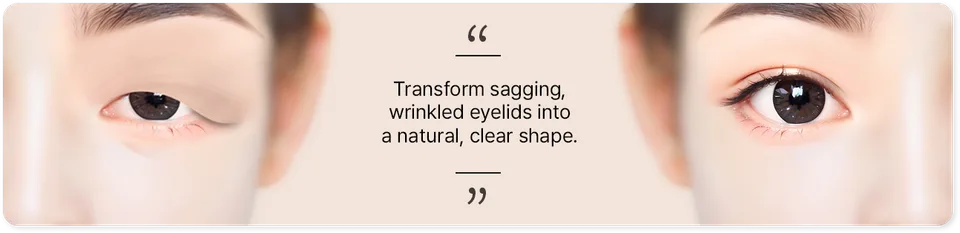
Loose, wrinkled skin
Skin that has stretched with age folds down over the crease and can rest on the lashes. This is the core of upper blepharoplasty: the surplus skin is cut out along the crease.
The clinic’s description: eyelids that sag and wrinkle, sometimes enough to narrow your view.
Extra fat that makes the lid puffy
Some heavy lids look full rather than folded. Through the same cut, the clinic removes muscle or fat as well as skin when they add to the heaviness and puffiness.
A weak lifting muscle (ptosis)
The clinic’s page names weak eyelid-opening muscles as the main cause of a sleepy look. Removing skin does not strengthen the muscle, so ptosis correction is added when the lid itself sits low over the eye.
Loose, wrinkled skin
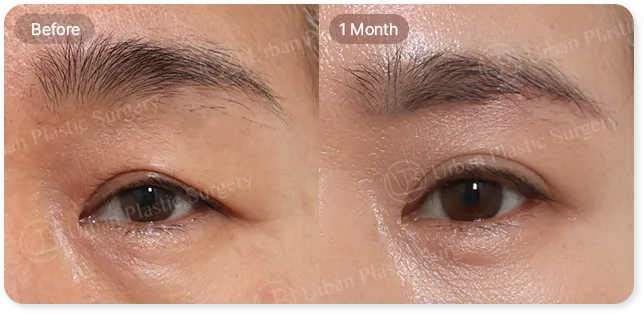
Clinic example: before, then 1 month later 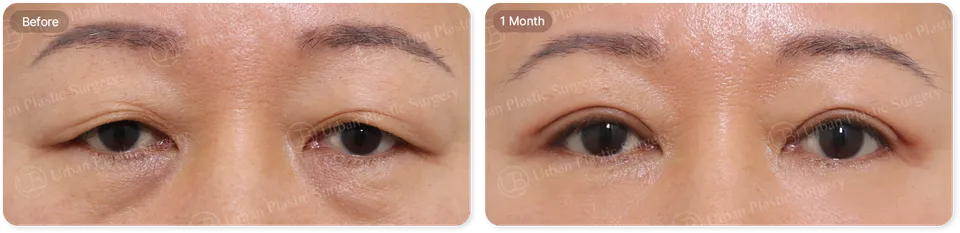
Clinic example: before, then at 1 month
Before and after photos from Urban Plastic Surgery’s English upper blepharoplasty page, shown as published and only resized. Lighting and angle can differ between the two halves. Outcomes vary from patient to patient, and every risk listed further down applies.
Image and photos: Urban Plastic Surgery, English upper blepharoplasty page, collected on 5 October 2026. The descriptions are our own, written from the clinic’s text.
Which method fits you?
Urban Plastic Surgery, our partner clinic, lists upper blepharoplasty under its eyelid surgery for middle-aged patients. The main choice is where the excess skin is cut out: in the crease, or just under the eyebrow. When a weak muscle is part of the droop, ptosis correction can be done in the same session.
How does upper blepharoplasty compare with a sub-brow lift?
Upper blepharoplasty
What happens
The cut follows the eyelid crease. Loose skin is removed, plus a strip of muscle or some fat if needed, and the crease can be set again as the cut is closed.
- Surgery time
- About 1 hour
- Anesthesia
- Sedation or local anesthesia
- Stitches out
- Day 7
- Downtime
- 7 to 14 days
- Scar position
- In the eyelid crease
- Crease line
- Can be set again
Suits Hooded lids where you want the crease to show clearly again, including puffy lids with extra fat
Sub-brow lift
What happens
Skin is taken from just below the eyebrow, so the scar sits at the brow edge and the crease is left alone.
- Surgery time
- About 1 hour
- Anesthesia
- Sedation or local anesthesia
- Stitches out
- Day 7
- Downtime
- 5 to 7 days
- Scar position
- At the lower edge of the brow
- Crease line
- Left as it is
Suits Hooded lids with a double eyelid line you like as it is, or thick skin close to the brow
Figures confirmed by the clinic on 8 October 2026. Surgery time, anesthesia and stitch removal match, and the clinic gives a longer return to daily life after upper blepharoplasty, so the choice rests mostly on scar position and your crease. Your surgeon confirms your own plan.
What happens on the day of upper blepharoplasty?
- Consultation with the surgeon. They check your brow position and how well your lids open, then mark how much skin to remove while you sit up. Tell the clinic in advance about every medicine you take, since some may have to be paused, and about earlier operations, blood pressure problems, asthma, allergies or past drug reactions.
- Local anesthesia numbs the area, and sedation can be added so you are more at ease. The surgeon confirms whether you will also have sedation. Beforehand the clinic asks for a fast of at least 6 hours: no water, gum, sweets or coffee.
- Extra skin, and sometimes a strip of muscle or fat, is removed through a cut in the crease. Fine stitches close the cut. The operation takes about 1 hour.
- Most people rest for a short time and go back to their hotel the same day.
How is the extra skin removed, step by step?
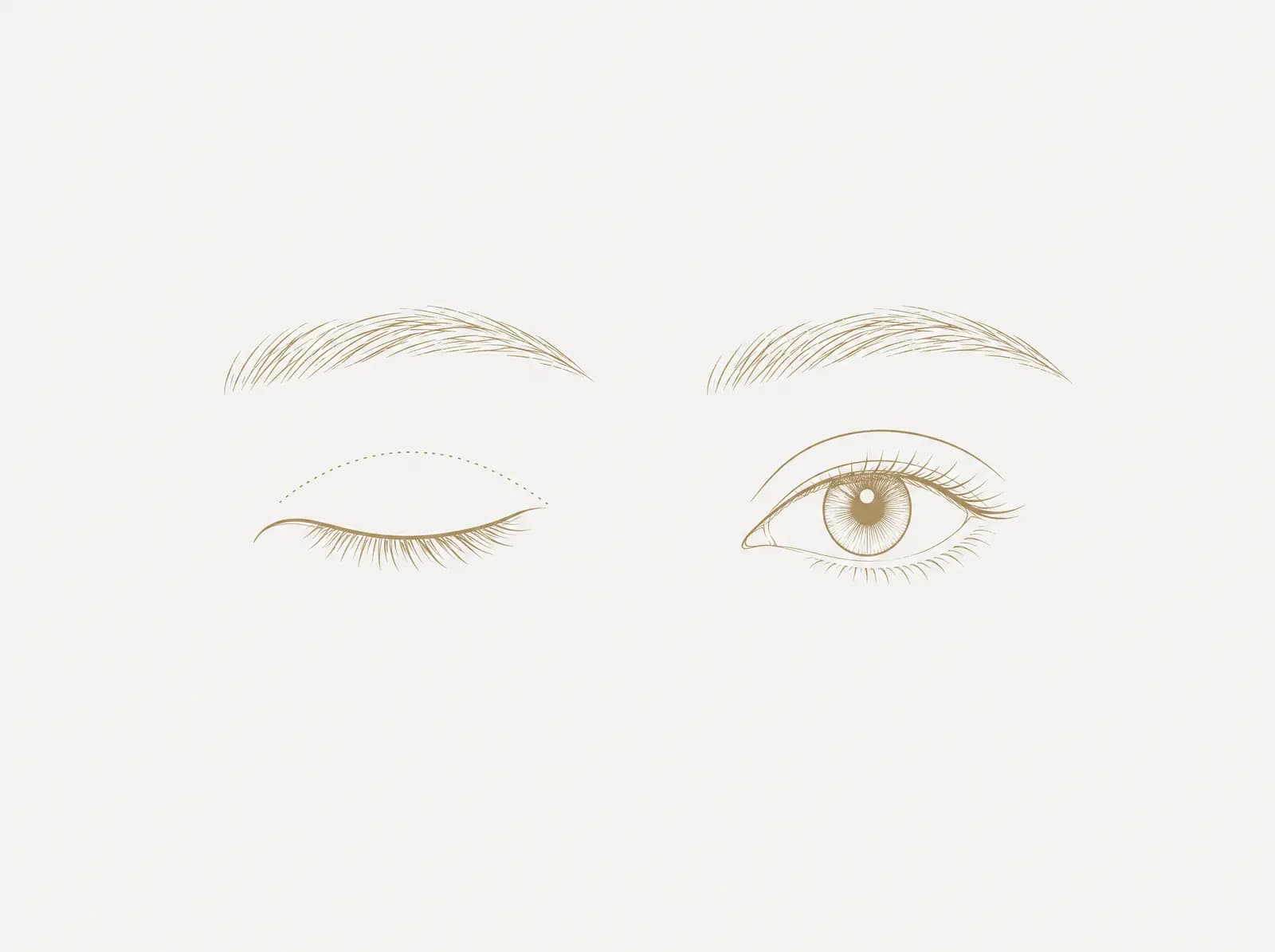
The clinic’s drawings for this operation. The width of skin taken out is planned for your own lids.
Upper blepharoplasty
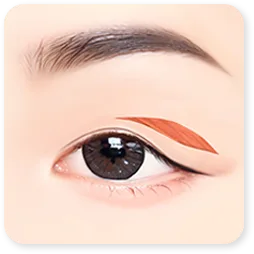
Step 1The surgeon designs the excision, marking exactly how much sagging skin will come off. 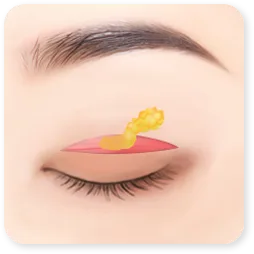
Step 2Excess skin is removed, along with muscle or fat where your lid needs it. 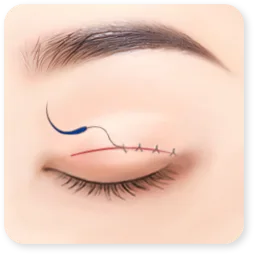
Step 3The cut is closed with thin stitches along the crease. 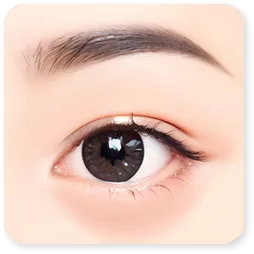
AfterSaggy, wrinkly eyelids are corrected.
Drawings: Urban Plastic Surgery, English upper blepharoplasty page, collected on 5 October 2026.
What is recovery like after upper blepharoplasty?
- Days 1 to 3
- Swelling and bruising are at their peak and the lids feel tight. Cold packs help, and so do the eye drops or ointment you are given. For roughly a week, the clinic wants your head propped above heart level, even while you sleep.
- Day 7
- Stitches come out. The clinic says showering is fine from the day after removal. Sunglasses cover any bruising that is left.
- Days 7 to 14
- The clinic gives 7 to 14 days before most people are back to daily life. The lids can still look swollen and bruised in this window.
- Weeks 2 to 4
- Bruising fades. The scar in the crease is pink and a little firm, and the lids can still look swollen. Leave heavy makeup off the scar and skip hard workouts for about three weeks, as the clinic advises.
- Months 1 to 3
- Swelling goes down and the scar fades into the crease. The result is usually judged at about three months, and the scar keeps softening after that.
How long should you stay in Seoul after upper blepharoplasty?
Plan on about 7 days in Seoul, and stay until your stitches are out. Upper blepharoplasty always involves a cut in the crease, the stitches come out on day 7, and flying is usually fine after that. The clinic gives 7 to 14 days back to daily life, so expect some swelling on the way home. Because alcohol and cigarettes delay healing, the clinic advises giving up both for at least a month. Check with the surgeon before saunas or swimming. If you become breathless or have chest pain, get emergency care first, then tell the clinic.
What are the risks of upper blepharoplasty?
- Swelling, bruising and tightness, which are expected and temporary
- Too much skin removed, so the eyes are hard to close fully and can feel dry or sore
- Watery or gritty eyes, or sensitivity to light, for a while after surgery
- A difference between the two eyelids, an uneven crease, or some loose skin left behind
- A scar that stays visible, thick or uneven
- A collection of blood under the lid skin (hematoma). If one side swells quickly and becomes more painful, especially soon after surgery, contact the clinic straight away; if you cannot reach the clinic, get emergency care.
- Infection. If a treated area blisters, or you see spreading redness, heat or fever, contact the clinic straight away.
- Rarely, blood collects behind the eye and puts vision at risk. If your sight changes suddenly or the eye becomes very painful, get emergency care first, then tell the clinic.
What affects the cost of upper blepharoplasty in Korea?
Upper blepharoplasty has no listed price yet; the clinic quotes after it sees your photos. The quote changes with how much skin and fat come out and with anything added: ptosis correction, a brow lift or lower eyelid surgery. The written version should name the surgeon and spell out anesthesia, follow-up visits and stitch removal.
Cases from the clinic
Before and after photos from Urban Plastic Surgery, shown with the patient’s consent, as the clinic provided them and resized for the web. Results differ from person to person, and the risks above apply to every case.
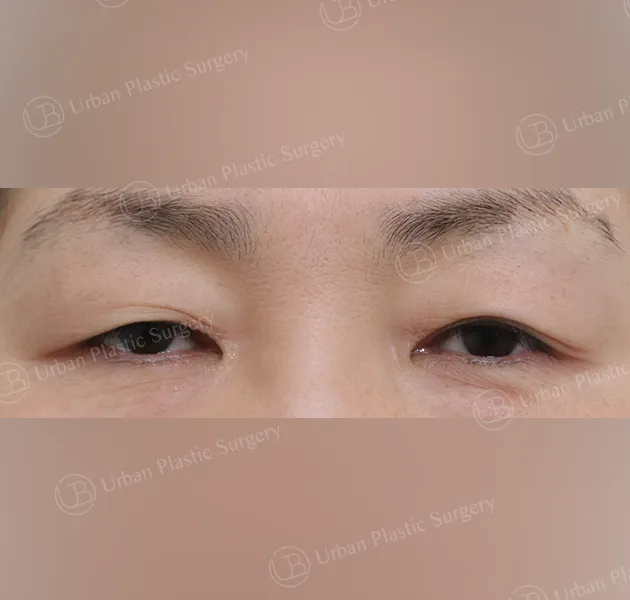
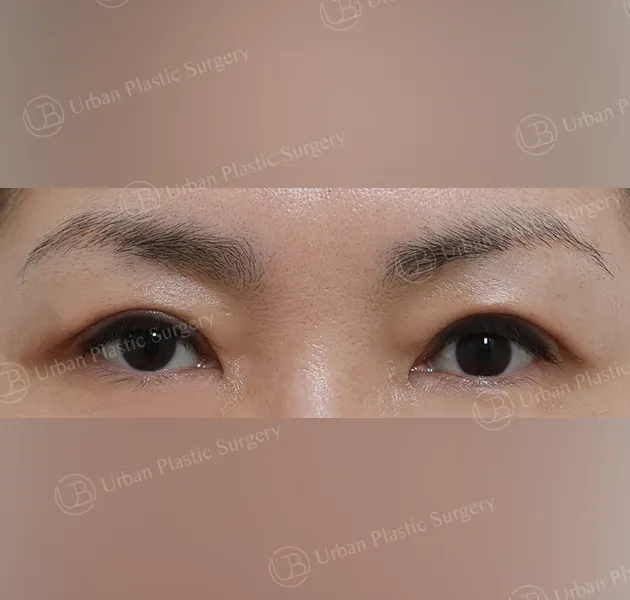
Upper blepharoplasty
Urban Plastic Surgery
More questions
What is the difference between upper blepharoplasty and double eyelid surgery?
Double eyelid surgery creates a crease, usually on younger eyelids. Upper blepharoplasty removes extra skin from lids that have loosened with age. The cut sits in the crease, so it can define the crease at the same time.
How long does upper blepharoplasty take?
Our partner clinic lists about 1 hour, under sedation or local anesthesia, and most people go back to their hotel the same day. UK NHS guidance gives a wider range of 45 minutes to 2.5 hours for eyelid surgery in general. Adding ptosis correction or removing fat makes it longer.
Will the upper blepharoplasty scar show?
The cut is placed in the natural crease, so the scar is usually hidden when your eyes are open. It looks pink for a few weeks and fades over the following months.
Should I have a sub-brow lift instead of upper blepharoplasty?
If you like your current double eyelid line and want to keep it, a sub-brow lift, which takes skin from just under the eyebrow, may suit you better. If you want the crease redefined, upper blepharoplasty is the usual choice. The surgeon decides after examining your eyelids.
When can I fly home after upper blepharoplasty?
Usually after stitch removal on day 7. The lids can still look puffy on the flight, and sunglasses cover leftover bruising and the pink crease scar.
Related procedures
Guides and short answers
Sources
- Clinic figures as published by Urban Plastic Surgery, collected October 8, 2026. Your surgeon confirms your own plan.
- Eyelid surgery. NHS
- Eyelid Surgery Risks and Safety. American Society of Plastic Surgeons
- Upper Eyelid Blepharoplasty. StatPearls, NCBI Bookshelf
Cases and clinic figures come from our partner clinic, Urban Plastic Surgery. The partnership does not change what we publish about risks and recovery.