Double eyelid surgery in Korea
Double eyelid surgery creates a crease on a monolid or defines a faint one. The suture method uses tiny openings; the incisional method cuts along the crease, usually lasts longer and can remove skin and fat. Either takes 30 to 60 minutes under sedation or local anesthesia with same-day discharge. Plan 5 to 7 days in Seoul, 7 if incisional.
- Surgery time
- 30 minutes to 1 hourUrban Plastic Surgery
- Anesthesia
- Sedation or local anesthesiaUrban Plastic Surgery
- Time in Seoul
- 5 to 7 days in Seoul. At least 7 with the incisional methodGeneral guidance
Questions about your own plan? A patient coordinator replies first, free of charge, then connects you with the partner clinic.

Who is a good candidate for double eyelid surgery?
- You have a monolid or a faint, uneven crease and want a defined one
- Your upper eyelid looks puffy or heavy and covers part of the crease
- You want a soft tapered (in-line) crease that merges into the inner corner, or an in-out crease that starts inside the inner corner fold and then rises above it
- Your eyelids are healthy, and you can keep the healing eyelids out of strong sun for the first weeks
When it may not be the right choice
- Your eyelid muscle is weak and the lid covers your pupil. Ptosis correction is usually needed, often in the same operation
- You have untreated dry eye or an active eye infection
- You want a Western-style high crease. It often looks unnatural on an East Asian eyelid
Which double eyelid crease shape suits you?
The clinic’s chart shows four crease shapes, set by where the line starts at the inner corner and how high it runs. One of them, semi-out, falls between in-out and out-line, which is why our guide to crease shapes describes only three main shapes. At consultation you try shapes on your own lid with the surgeon before anything is marked.
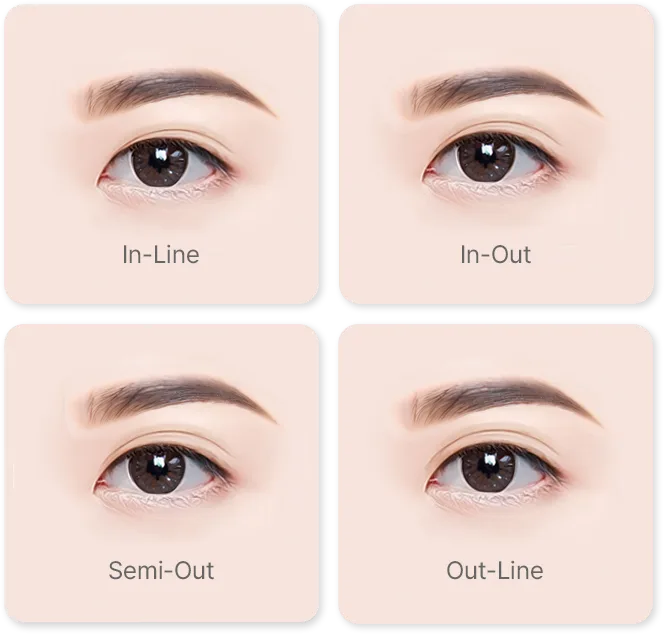
Tapered creaseIn-line
Starts inside the inner corner fold (epicanthal fold) and widens toward the outer corner. The clinic calls it the most common shape on East Asian eyes, because of how the eye and the area around it are built.
You want a subtle change. The clinic also suggests it for men who want a low, quiet line.
In-out creaseIn-out
Starts inside the fold close to the inner corner and climbs above it, leaving most of the line in view. For deep-set lids or a strong inner corner fold, the clinic may suggest fat grafting to the upper eyelid or epicanthoplasty alongside it.
You want a line that is easy to see but stays soft at the inner corner.
Near-parallel creaseSemi-out
Sits between the in-out and out-line shapes. In the clinic’s chart it starts close to the inner corner and runs almost evenly across the lid.
Parallel creaseOut-line
Starts above the inner corner fold and runs at an even height, so it sits higher than the tapered or in-out shapes and gives the most defined look. With a pronounced fold the clinic says combining it with epicanthoplasty can help the line look natural, and it warns that opening the inner corner too far can leave a visible scar or an unnatural line.
You have little or no inner corner fold, little of the inner corner shows, and the space between your eyes is balanced.
The clinic’s own rule of thumb is that crease height shapes about 40% of the final look and the inner corner fold about 60%, so the surgeon checks your fold before suggesting a shape.
Tapered crease
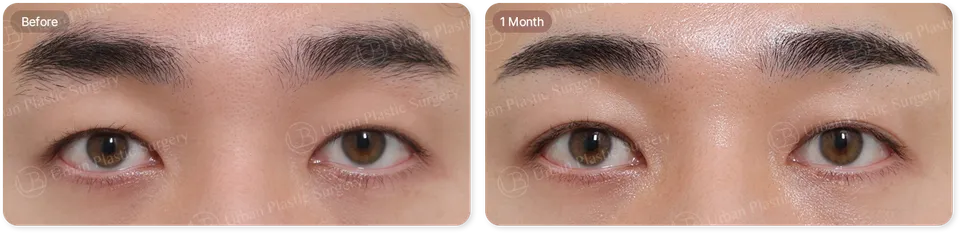
One patient, before and 1 month after 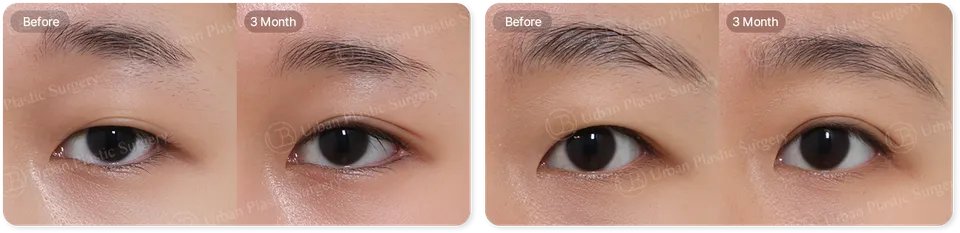
Two patients, each before and 3 months after
In-out crease
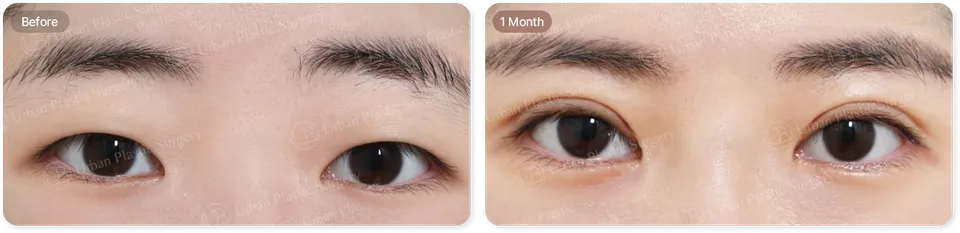
One patient, before and 1 month after 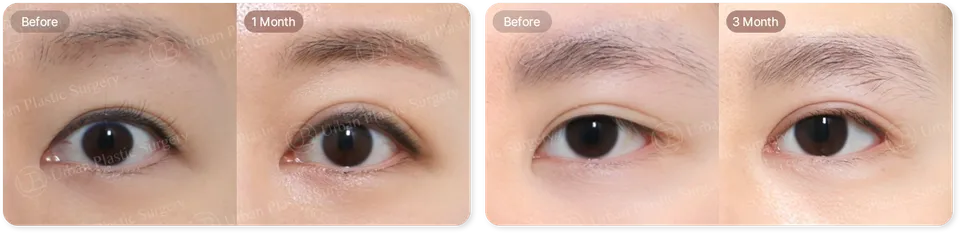
Two patients, before and 1 month after, and before and 3 months after
Parallel crease
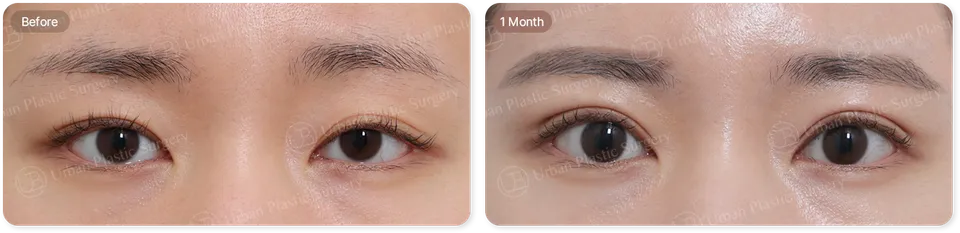
One patient, before and 1 month after 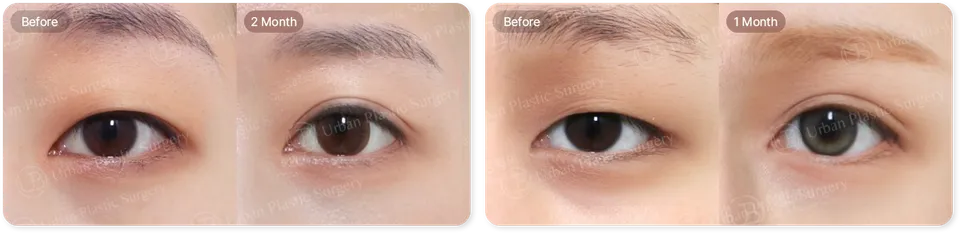
Two patients, before and 2 months after, and before and 1 month after
Example photos from Urban Plastic Surgery’s double eyelid pages, as the clinic published them and resized for the web. Lighting, makeup and contact lenses differ between some photos. Results differ from person to person, and the risks below apply to every case.
Crease chart and example photos: Urban Plastic Surgery, English double eyelid pages, collected 5 October 2026. The descriptions are ours, based on the clinic’s.
Which method fits you?
Double eyelid surgery, also called Asian blepharoplasty, comes in two main methods at the clinic. The surgeon recommends one after looking at skin thickness, fat and how the eyelid opens.
How do the two methods compare at the clinic?
Suture method (non-incisional)
What happens
Fine stitches are buried through tiny openings to fold the skin into a crease. Nothing is removed.
- Surgery time
- 30 minutes to 1 hour
- Anesthesia
- Sedation or local anesthesia
- Stitches out
- None to remove
- Downtime
- 5 to 7 days
Suits Thin eyelids with little fat, a low tapered crease, short downtime
Incisional method
What happens
A cut along the planned crease. Extra skin and fat can be removed and the crease is fixed inside.
- Surgery time
- 30 minutes to 1 hour
- Anesthesia
- Sedation or local anesthesia
- Stitches out
- Day 7
- Follow-up visits
- 1 visit
- Downtime
- 7 to 14 days
Suits Thicker or puffy eyelids, excess skin, a crease that has come loose before
Clinic figures from Urban Plastic Surgery’s English method pages, collected 5 October 2026, with stitch removal and downtime as confirmed by the clinic on 8 October 2026. Your surgeon confirms your own plan.
What happens on the day of double eyelid surgery?
- Consultation with the surgeon. You choose the crease height and shape in front of a mirror.
- Sedation or local anesthesia keeps you comfortable during the procedure.
- The surgeon makes the crease with buried sutures or through an incision. This takes 30 to 60 minutes.
- After a short rest you head back to your hotel the same day. The new crease looks high and puffy at first, which is expected.
How is each method done, step by step?
The clinic’s drawings of each method. Your own design and the number of stitch points depend on your eyelid.
Suture method (non-incisional)
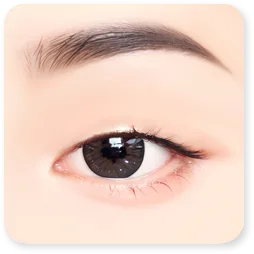
BeforeA monolid with thin skin and no sagging, the kind of lid this method suits. 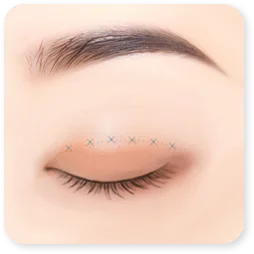
Step 1The surgeon marks the crease height and shape you agreed at consultation. 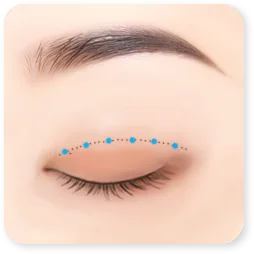
Step 2Tiny openings along the line. The clinic uses about 6 to 8, depending on how elastic the skin is. 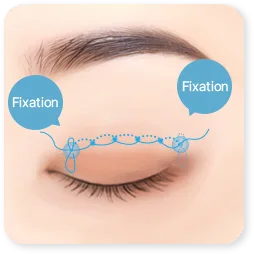
Step 3A buried stitch, tied with a series of 5 to 7 knots at the clinic, holds the skin to the muscle below. 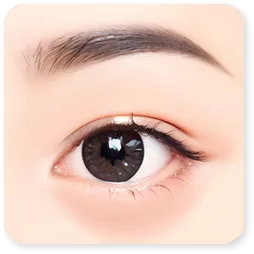
AfterA crease forms where the stitch holds. It looks higher and puffier at first.
Incisional method
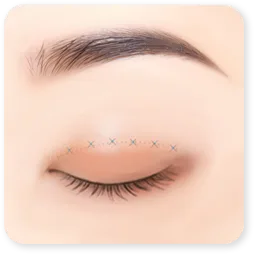
Step 1The crease height and shape are marked, as for the suture method. 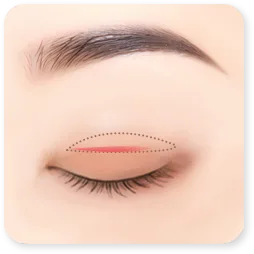
Step 2The surgeon opens the lid along the marked line, keeping the cut as small as your eyelid allows. 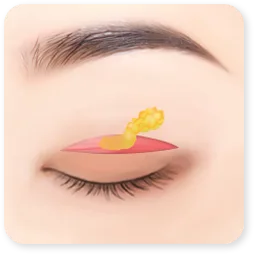
Step 3Only the skin, muscle and fat that need to go are removed, then the crease is fixed inside.
Drawings: Urban Plastic Surgery, English suture and incisional method pages, collected 5 October 2026.
What is recovery like after double eyelid surgery?
- Days 1 to 3
- Swelling and some bruising peak. Cold compresses help, and so does sleeping with your head raised.
- Days 5 to 7
- Most people feel fine going out, often with glasses or sunglasses over the remaining swelling. If you had the incisional method, the stitches come out on day 7. Ask the surgeon before using eye makeup near the incision.
- Weeks 2 to 4
- The crease still looks higher and thicker than the final result. This is normal.
- Months 1 to 3
- Swelling keeps going down and the crease softens. Surgeons usually judge the final shape at around three months.
How long should you stay in Seoul after double eyelid surgery?
Five to seven days in Seoul usually covers the first part of double eyelid surgery recovery, and the method sets the timing. After an incisional crease the stitches come out on day 7, so stay at least seven days and fly after that visit. The clinic gives 7 to 14 days of downtime for that method, so plan some days off at home as well. A suture crease has no stitches to remove, so the stay covers the first, most visible swelling. Agree the flight date with the surgeon. Pack sunglasses. The clinic asks you to avoid alcohol and smoking for at least a month and hard exercise for about three weeks. Ask the surgeon before saunas or swimming.
What are the risks of double eyelid surgery?
- Swelling and bruising, which are expected and temporary
- Asymmetry between the two eyes, sometimes needing revision surgery
- A crease that fades or loosens over time, more often with the suture method
- A crease that looks too high or thick, which takes months to settle and may need revision
- Dry or gritty eyes, or trouble closing them fully for a while. With the suture method, a buried stitch can irritate the eye
- Bleeding under the skin (a hematoma), infection or visible scarring. If one side swells quickly and becomes more painful, especially soon after surgery, contact the clinic straight away; if you cannot reach the clinic, get emergency care. In rare cases, bleeding behind the eye can affect vision. If your sight changes suddenly or the eye becomes very painful, get emergency care first, then tell the clinic
What affects the cost of double eyelid surgery in Korea?
We do not list a price for double eyelid surgery yet; the clinic quotes once it has seen your eyelid photos. Three choices shape the quote: a suture or an incisional crease, whether skin or fat is taken out, and whether ptosis correction or eye corner surgery is added in the same session. Ask for it in writing with the surgeon’s name, the follow-up visits and, for the incisional method, stitch removal.
Cases from the clinic
Before and after photos from Urban Plastic Surgery, shown with the patient’s consent, as the clinic provided them and resized for the web. Results differ from person to person, and the risks above apply to every case.
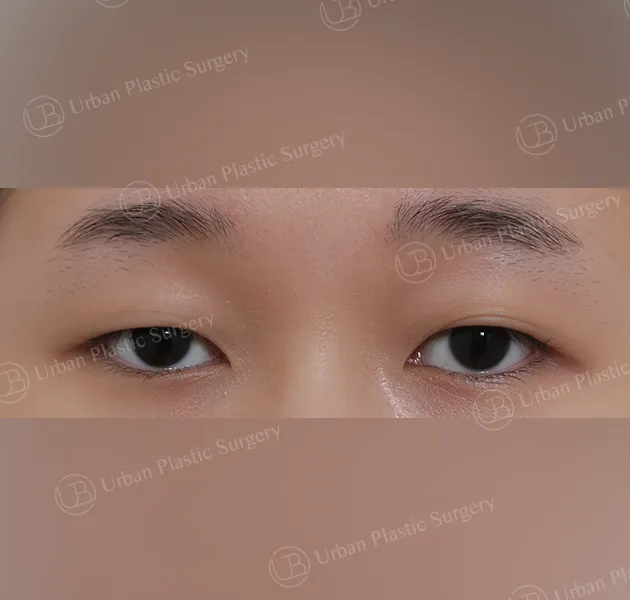
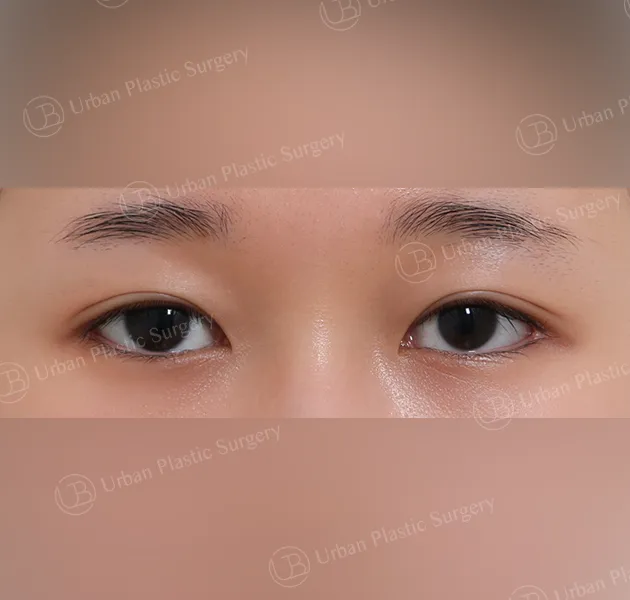
Double eyelid surgery
- Suture double eyelid
Urban Plastic Surgery
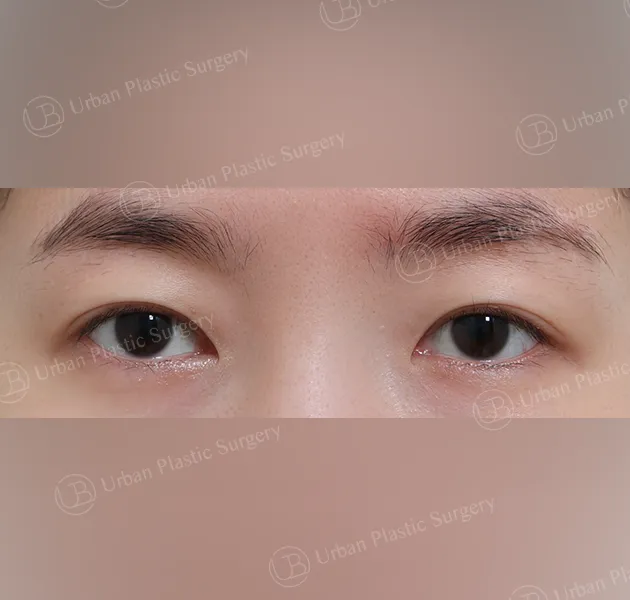
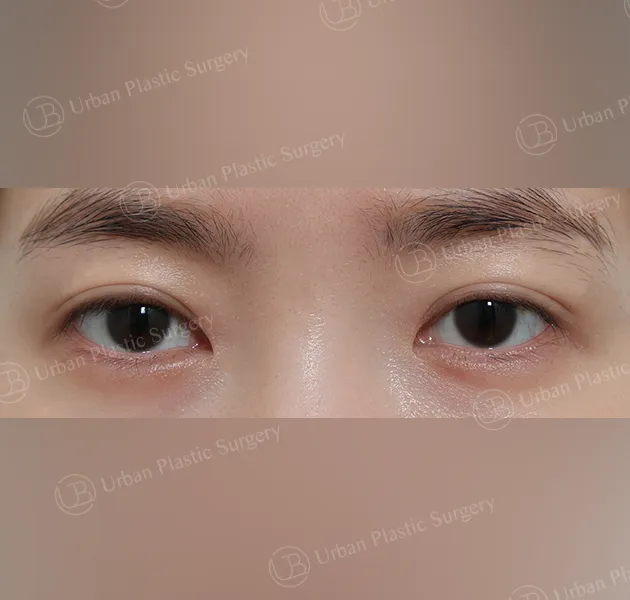
Double eyelid surgery
- Suture double eyelid
- Revision
Urban Plastic Surgery
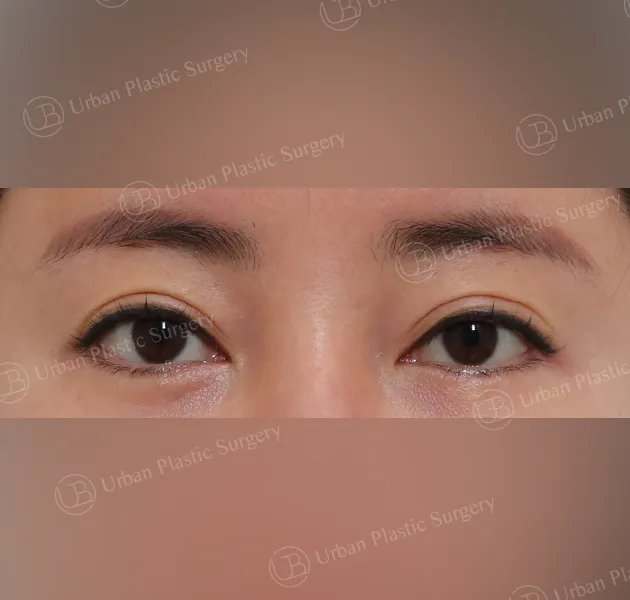
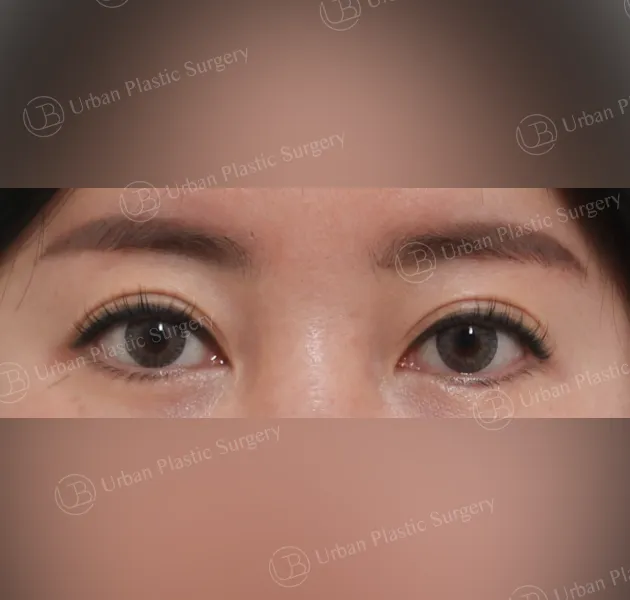
Double eyelid surgery
- Incisional double eyelid
Urban Plastic Surgery
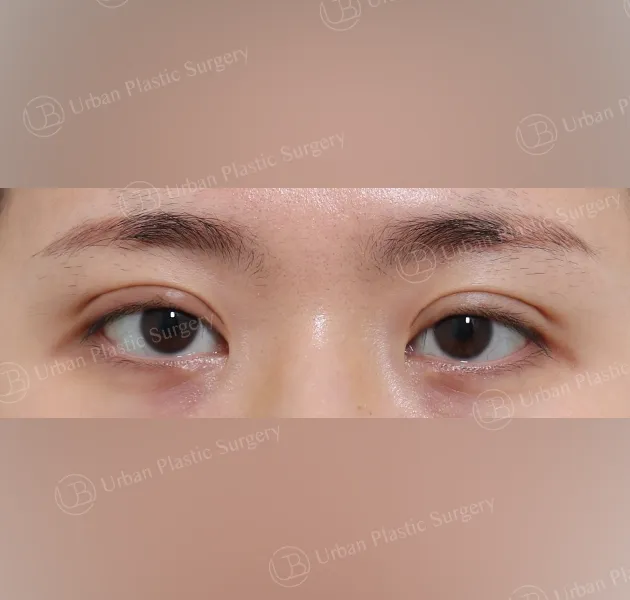
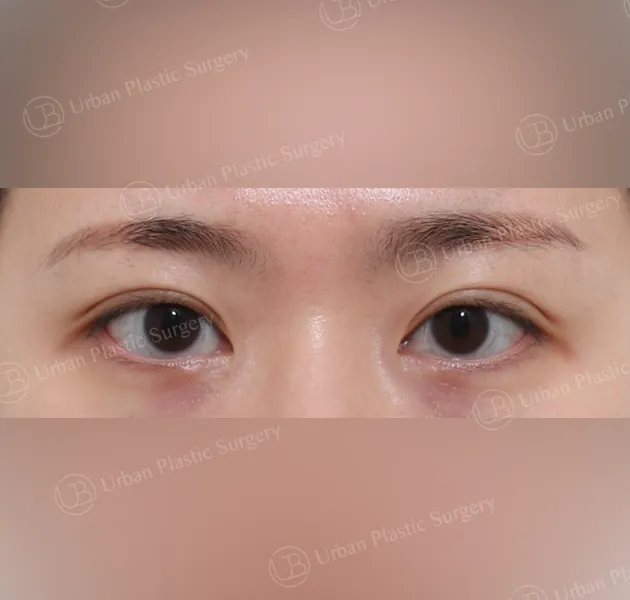
Double eyelid surgery
- Suture double eyelid
Urban Plastic Surgery
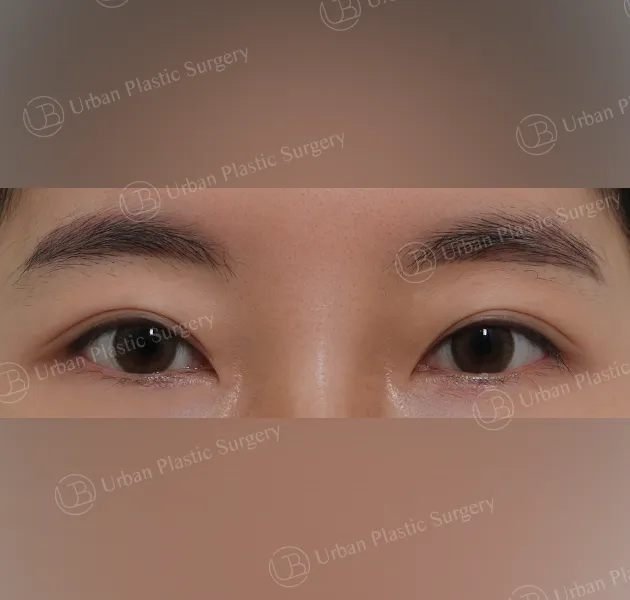
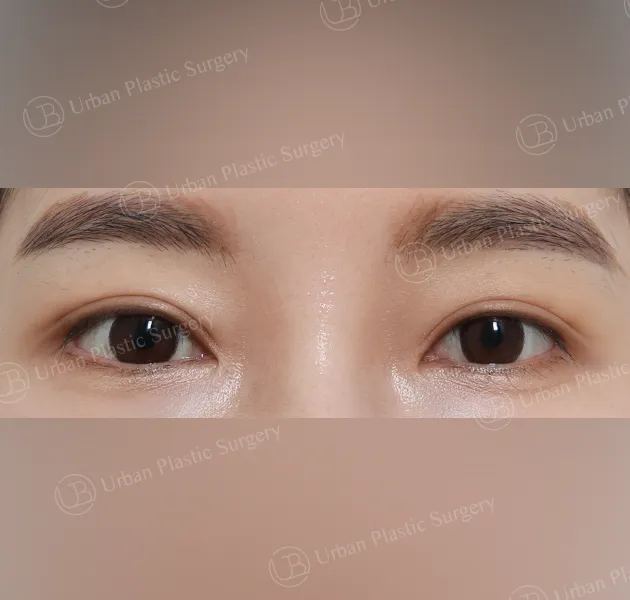
Double eyelid surgery
- Suture double eyelid
- Revision
Urban Plastic Surgery
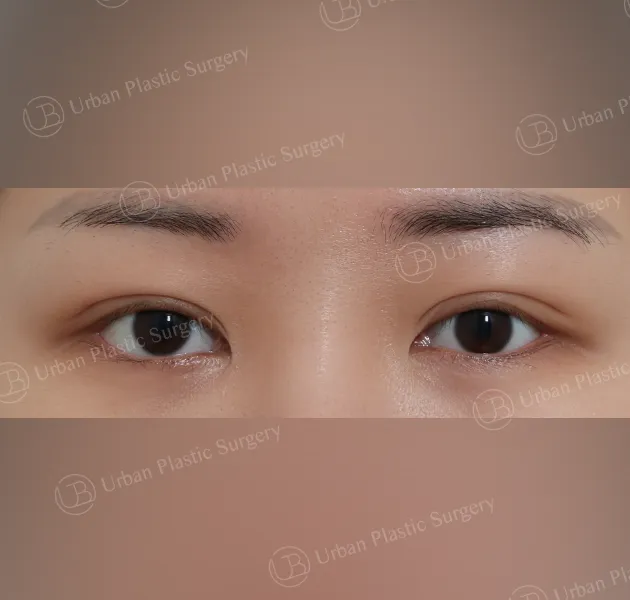
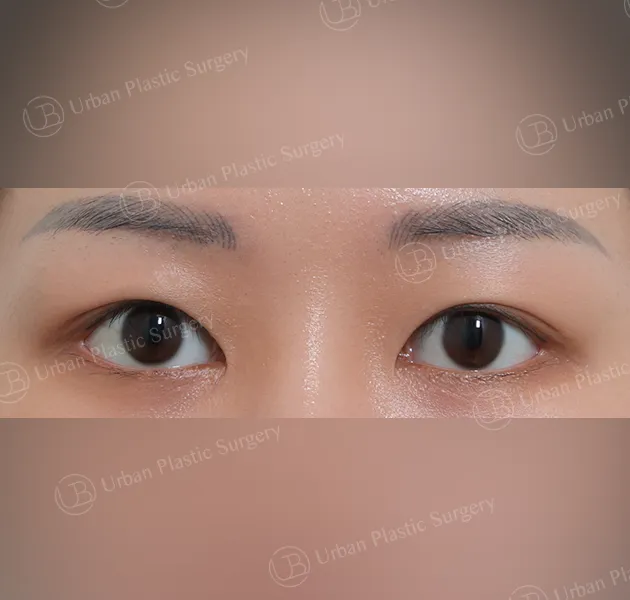
Double eyelid surgery
- Incisional double eyelid
Urban Plastic Surgery
More questions
How long does double eyelid surgery take?
About 30 minutes to 1 hour at the clinic, under sedation or local anesthesia. You go home the same day.
Which lasts longer, the suture or the incisional method?
The incisional method usually lasts longer, because the crease is fixed inside the eyelid, though it can still loosen or need revision. A suture crease can loosen over the years, especially on thicker eyelids, and may need to be redone.
When can I fly home after double eyelid surgery?
A suture crease has no stitches to remove, so most people fly from around day 6, on a date agreed with the surgeon. With the incisional method the stitches come out on day 7, so fly after that visit. Some swelling on the flight is normal.
Can double eyelid surgery be combined with other procedures?
Yes. Ptosis correction and eye corner surgery are the usual additions. Adding either can lengthen recovery, so confirm your days in Seoul with the surgeon before you book flights.
Related procedures
Guides and short answers
Sources
- Clinic figures as published by Urban Plastic Surgery, collected October 8, 2026. Your surgeon confirms your own plan.
- Eyelid Surgery Risks and Safety. American Society of Plastic Surgeons
- Eyelid Surgery Recovery. American Society of Plastic Surgeons
- Treatment of Suture-related Complications of Buried-suture Double-eyelid Blepharoplasty in Asians. PubMed Central, US National Library of Medicine
Cases and clinic figures come from our partner clinic, Urban Plastic Surgery. The partnership does not change what we publish about risks and recovery.