Ptosis correction in Korea
Ptosis correction, called eye shape correction in Korea, tightens the muscles that lift the upper eyelid so droopy eyelids open wider. The non-incisional method uses tiny punctures (about 30 minutes); the incisional method, a cut along the crease (about an hour). Either way you go home the same day, after sedation or local anesthesia. Plan about 7 days in Seoul.
- Surgery time
- 30 minutes to 1 hourUrban Plastic Surgery
- Anesthesia
- Sedation or local anesthesiaUrban Plastic Surgery
- Time in Seoul
- About 7 days in SeoulGeneral guidance
Questions about your own plan? A patient coordinator replies first, free of charge, then connects you with the partner clinic.

Who is a good candidate for ptosis correction?
- One or both upper lids sit low over the iris, the colored part of your eye, so you look sleepy. As a rule of thumb, the clinic looks for less than 80% of the iris showing when your eyes are fully open
- You raise your eyebrows or tense your forehead to open your eyes, often without noticing, and your forehead feels tired by evening
- You are planning double eyelid surgery and the surgeon finds a mild droop. The two are often done in one operation
- Your eyes are healthy and the droop came on slowly, over years
When it may not be the right choice
- Your eyelid drooped suddenly, or the droop comes with double vision or a headache. These can be signs of a serious problem, so get emergency care first, before thinking about surgery. If the lid height changes during the day, see a doctor before any eyelid surgery, because a muscle or nerve condition can cause these signs
- Your lifting muscle barely works, for example because the droop has been there since birth. A different operation, such as a brow suspension, may be needed
- Your dry eye is not yet under control, or you have an eye infection right now
- You want to keep a monolid. Ask about ptosis correction for monolids, which lifts the lid without making a crease
Which crease line suits you with ptosis correction?
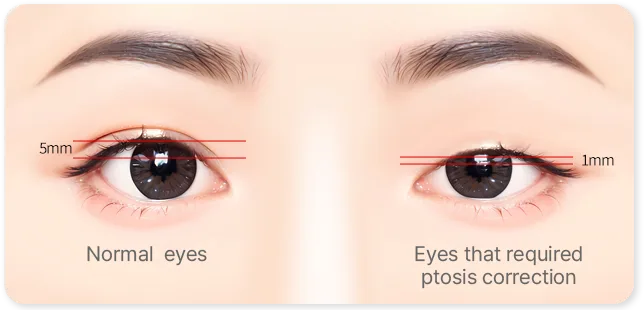
Ptosis correction sets two things in one operation: how far the lid opens and where the crease sits. The clinic’s drawing shows the first, a normal lid next to one low enough to need correction. For the second, the clinic groups its ptosis examples under three crease lines it calls in-line, in-out and out-line.
Tapered creaseIn-line
A low line that starts inside the inner corner fold and gradually broadens toward the outer corner. By the clinic’s account, it is the most common line on East Asian eyes.
You want your eyes to look more awake without an obvious new line. For men, the clinic recommends this line when a subtle crease is the goal.
In-out creaseIn-out
Begins near the inner corner, then rises clear of the fold so more of the line shows. If your lids are sunken or the inner corner fold is strong, the clinic may pair it with upper eyelid fat grafting or epicanthoplasty (inner eye corner surgery).
You want a crease people can see that still looks soft.
Parallel creaseOut-line
Runs at an even height above the inner corner fold, so it sits highest and looks the most defined. Where the fold is pronounced, the clinic may add epicanthoplasty. It also cautions that over-opening the corner risks a noticeable scar or a line that looks unnatural.
Your eyes have little or no inner corner fold, and the space between them is balanced.
Before suggesting a line, the clinic checks the space between your eyes and how much of the inner corner shows.
Tapered crease
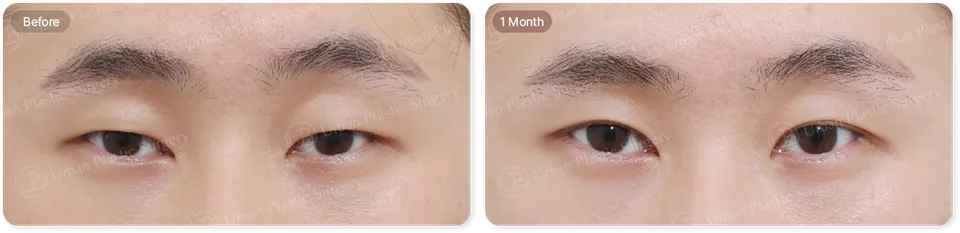
From the clinic’s non-incisional page: before and 1 month after 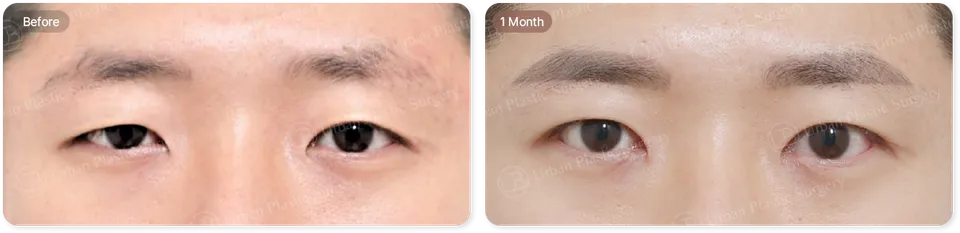
From the clinic’s incisional page: before and 1 month after
In-out crease
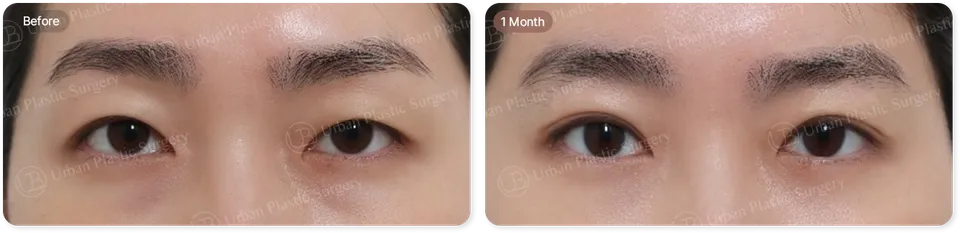
From the clinic’s non-incisional page: before and 1 month after 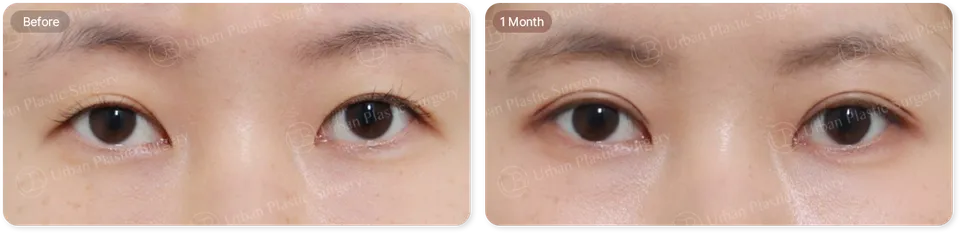
From the clinic’s incisional page: before and 1 month after
Parallel crease
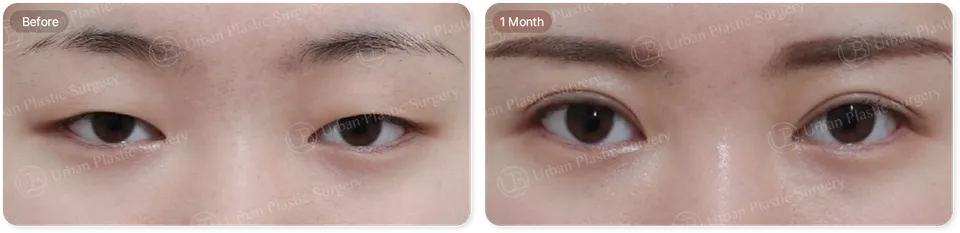
From the clinic’s non-incisional page: before and 1 month after 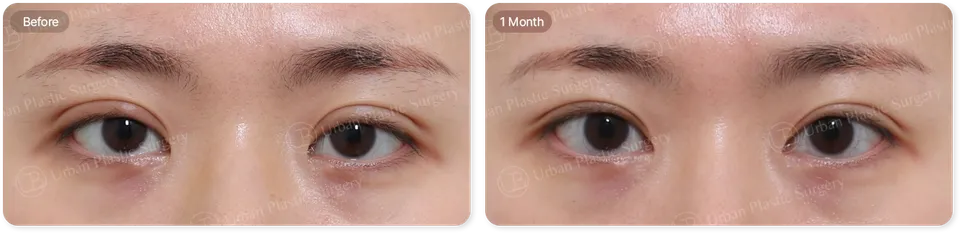
From the clinic’s incisional page: before and 1 month after
Before and after photos as they appear on Urban Plastic Surgery’s two ptosis correction pages, only resized for this site. The label under each one says which of those pages it comes from. Light and makeup vary between photos. Every result is individual, and the risks further down this page apply to all of them.
Drawing and photos: Urban Plastic Surgery’s English ptosis correction pages (non-incisional and incisional), collected on 5 October 2026. We wrote the descriptions from the clinic’s own text.
Which method fits you?
The clinic offers two methods. Which one fits depends mostly on how much fat your lid holds and how far it droops. Both usually set a double eyelid crease in the same step.
How do non-incisional and incisional ptosis correction compare?
Non-incisional (suture) ptosis correction
What happens
A stitch is passed through a few tiny punctures and a tunnel inside the lid, then tightened to lift Müller’s muscle, one of the two muscles that raise the lid. No tissue is removed.
- Surgery time
- About 30 minutes
- Anesthesia
- Sedation or local anesthesia
- Degree of droop
- Mild to moderate
- Scarring
- Minimal
- Follow-up visits
- 1 visit
- Downtime
- 7 days
Suits Thin eyelids with little or no fat and a mild to moderate droop
Incisional ptosis correction
What happens
A cut along the crease lets the surgeon remove sagging skin and fat, then secure the levator, the main lifting muscle, to the firm plate at the lid edge (the tarsal plate).
- Surgery time
- About 1 hour
- Anesthesia
- Sedation or local anesthesia
- Degree of droop
- Severe
- Scarring
- Similar to other eyelid surgery scars
- Stitches out
- Day 7
- Follow-up visits
- 1 visit
- Downtime
- 7 days
Suits Thicker eyelids with extra fat, a severe droop, or loose skin to remove
Figures from the method comparison and fact boxes on Urban Plastic Surgery’s English ptosis correction pages, collected on 5 October 2026, with anesthesia and stitch removal as confirmed by the clinic on 8 October 2026. Your own plan is set by your surgeon.
What happens on the day of ptosis correction?
- Consultation with the surgeon, who measures each lid’s opening, tests the lifting muscle and plans the crease with you. Tell the clinic beforehand about any medicines you take and conditions such as high blood pressure, asthma or allergies.
- Sedation or local anesthesia keeps you comfortable. The clinic asks you not to eat or drink anything, including water, gum or coffee, for at least 6 hours beforehand.
- The surgeon tightens the lifting muscle through tiny punctures or a crease incision. The operation lasts 30 to 60 minutes.
- You rest for a short while and leave the clinic the same day. The lids may feel tight and may not close fully at first, so ask which eye drops or ointment to use at night.
How does each method lift the lid, step by step?
The clinic’s drawings of both methods. Your crease design and how much the muscle is tightened depend on your own eyelid.
Non-incisional (suture) ptosis correction
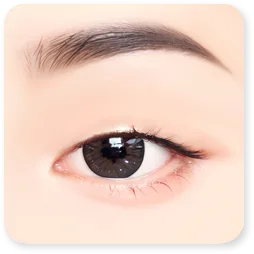
BeforeA lid with no crease that looks heavy and tired. 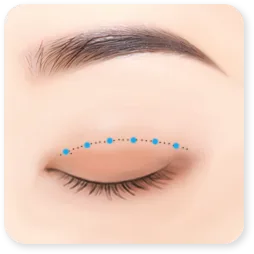
Step 1The surgeon marks the crease and makes a few tiny punctures along it. 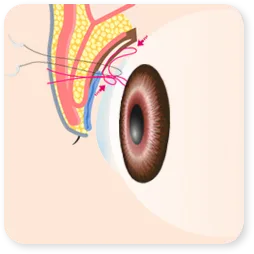
Step 2A stitch runs through a tunnel inside the lid and is knotted there, with nothing cut away. 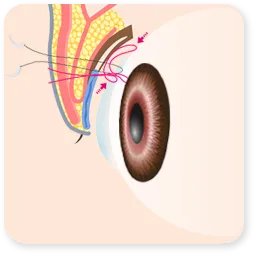
Step 3Tightening the stitch lifts Müller’s muscle, so the lid sits higher over the iris. 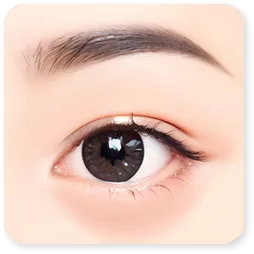
AfterThe lid opens further and a crease forms. Swelling hides the settled shape for some weeks.
Incisional ptosis correction
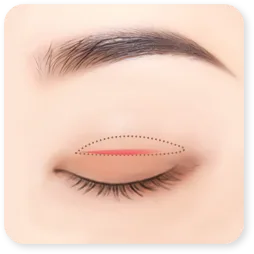
Step 1The incision is marked along the planned crease. 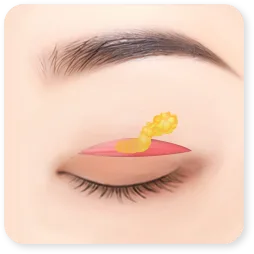
Step 2Through the cut, sagging skin and extra fat are removed. 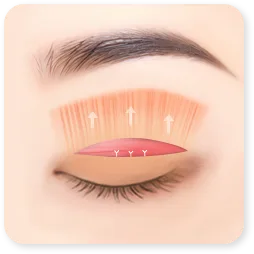
Step 3The levator is secured to the tarsal plate, which strengthens its pull on the lid.
Drawings: Urban Plastic Surgery, English non-incisional and incisional ptosis correction pages, collected 5 October 2026.
What is recovery like after ptosis correction?
- Days 1 to 3
- Swelling and bruising peak, and the lids can feel tight and hard to close fully. Cold compresses help with swelling. The clinic asks you to keep your head above heart level for about a week.
- Days 5 to 7
- Any stitches come out at the day 7 check. By about a week most people go out, often in glasses. The clinic asks you to keep heavy makeup off the lids for about three weeks.
- Weeks 2 to 4
- The lids can look a little high, uneven or stiff while swelling goes down. This is common and changes week by week.
- Months 1 to 3
- Lid height and crease settle, and the surgeon usually judges the outcome at around three months.
How long should you stay in Seoul after ptosis correction?
Allow about seven days in Seoul, and book your flight for after the day 7 check, when any stitches come out. The clinic lists about seven days of downtime for either method. Your lids may not close fully yet, so carry eye drops and sunglasses in your hand luggage. The clinic asks you not to drink or smoke for at least a month, and to wait about three weeks before strenuous exercise. Check with the surgeon before a sauna or a swim.
What are the risks of ptosis correction?
- Under-correction or over-correction, so a lid sits too low or too high and may need adjusting
- A difference in height or crease shape between the two eyes
- Eyes that do not close fully for a while, which can leave them dry, gritty or watery, mostly at night
- The correction loosening over time, so the lid droops again and needs to be redone
- Expected, temporary swelling and bruising
- Infection, a scar along the crease after the incisional method, or a buried stitch that irritates the eye
- Bleeding under the skin (a hematoma). If one side swells quickly and becomes more painful, especially soon after surgery, contact the clinic straight away; if you cannot reach the clinic, get emergency care. Rarely, bleeding behind the eye can threaten vision. If your sight changes suddenly or the eye becomes very painful, get emergency care first, then tell the clinic
What affects the cost of ptosis correction in Korea?
There is no price for ptosis correction on this page yet, because the price depends on your eyelids and the method, and the clinic sets it after assessing your eyes. What moves the quote: the non-incisional (suture) or incisional method, one eye or both, how much skin or fat comes out, and whether a double eyelid crease or epicanthoplasty is added. Ask for a written quote that names the surgeon and lists the follow-up visit and any stitch removal.
Cases from the clinic
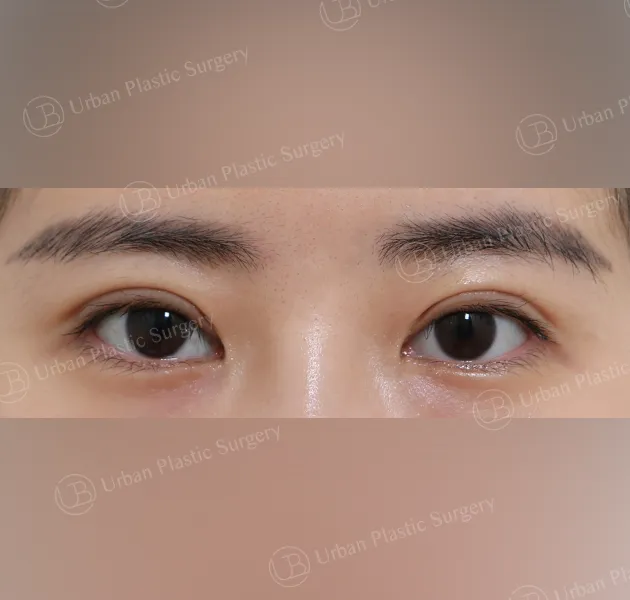
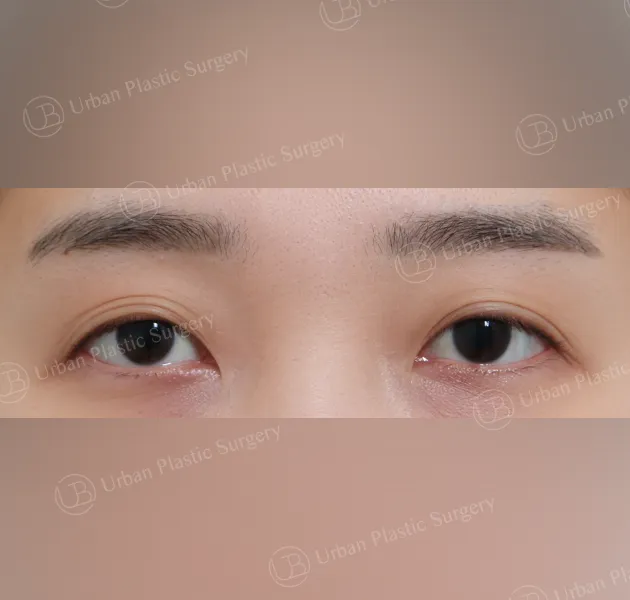
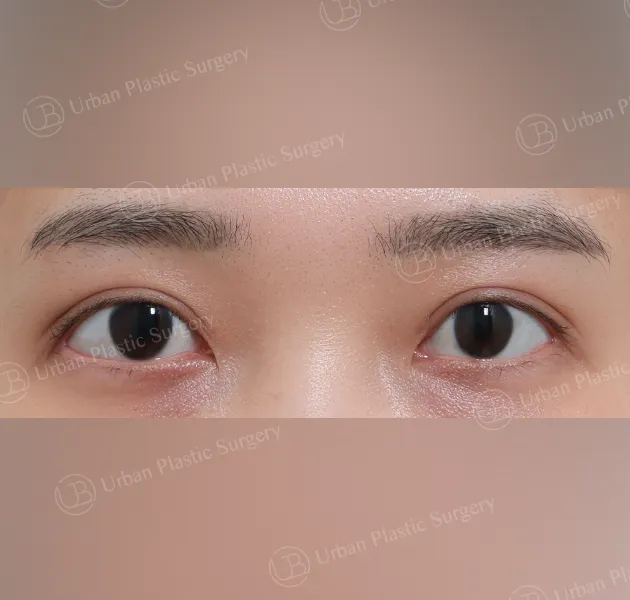
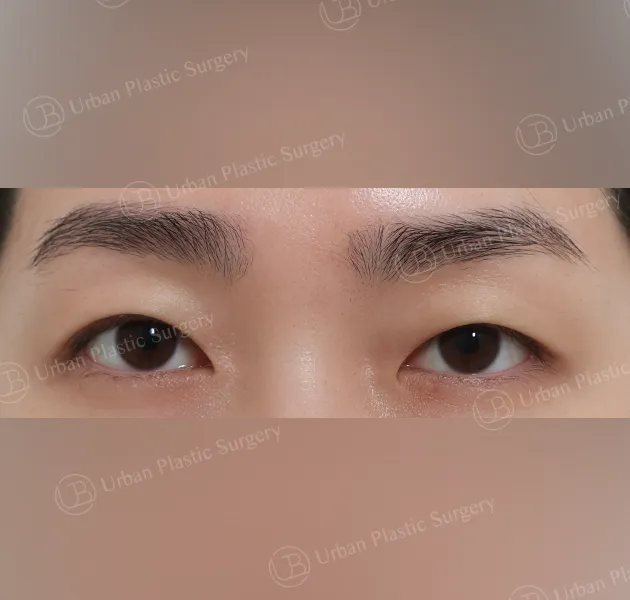
Before and after photos from Urban Plastic Surgery, shown with the patient’s consent, as the clinic provided them and resized for the web. Results differ from person to person, and the risks above apply to every case.
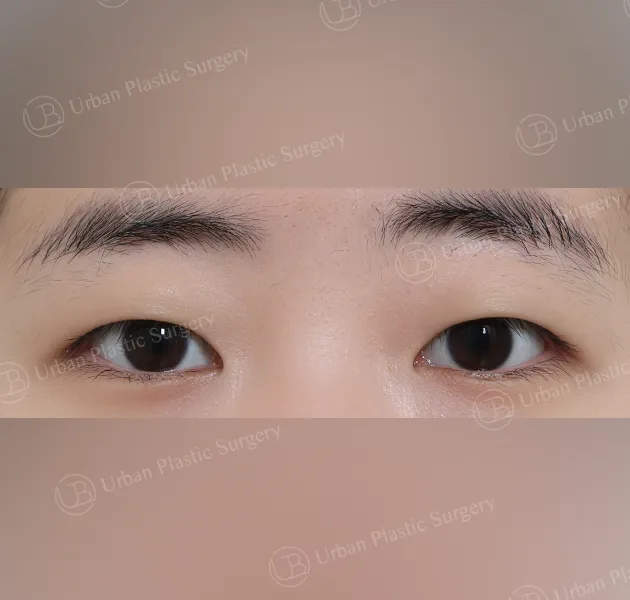
Ptosis correction
- Non-incisional ptosis correction
Urban Plastic Surgery
Ptosis correction
- Incisional ptosis correction
Urban Plastic Surgery
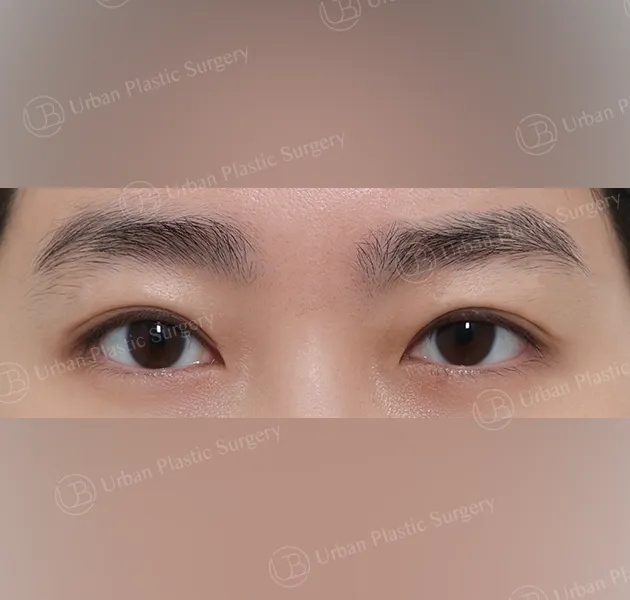
Ptosis correction
- Non-incisional ptosis correction
Urban Plastic Surgery
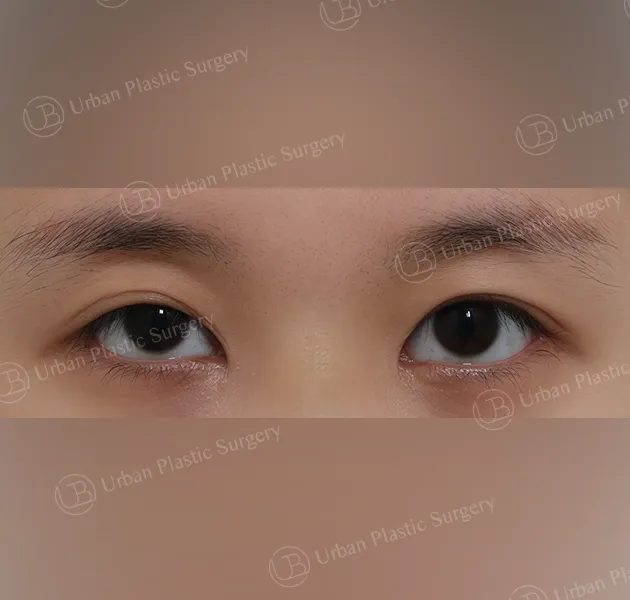
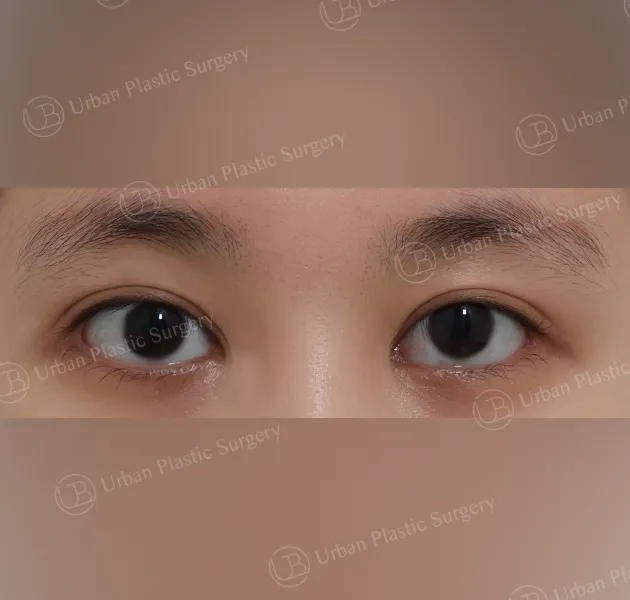
Ptosis correction
- Incisional ptosis correction
Urban Plastic Surgery
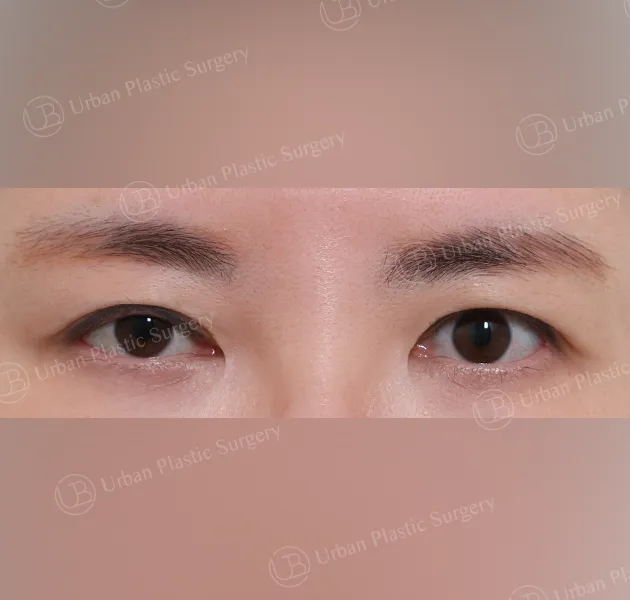
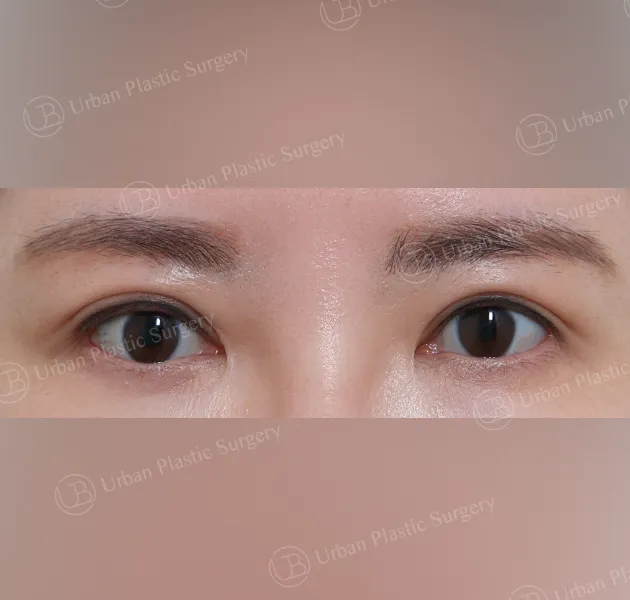
Ptosis correction
- Non-incisional ptosis correction
Urban Plastic Surgery
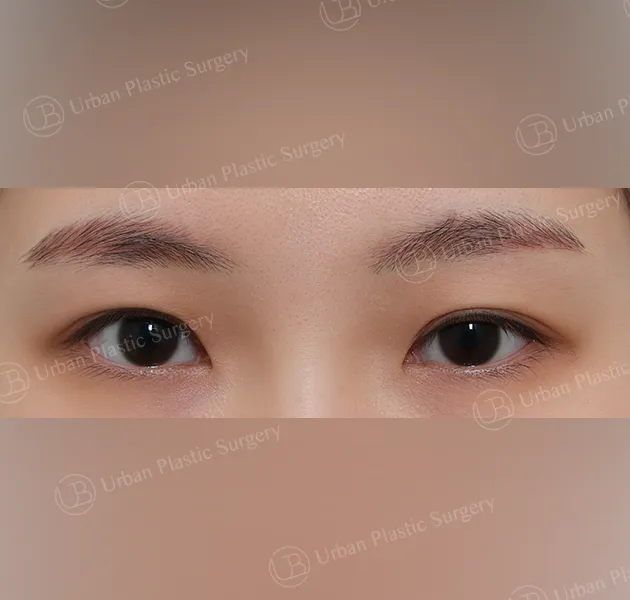
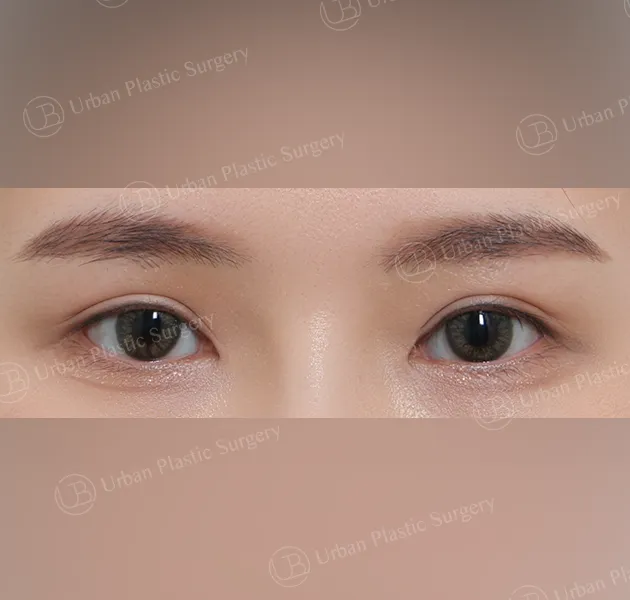
Ptosis correction
- Incisional ptosis correction
Urban Plastic Surgery
More questions
What is the difference between ptosis correction and double eyelid surgery?
Double eyelid surgery makes a crease. Ptosis correction, also called droopy eyelid surgery, changes how far the lid opens by tightening the muscles that lift it. In Korea the two are often done in one operation, so the crease and the lid opening are planned together.
Do I need non-incisional or incisional ptosis surgery?
In the clinic’s comparison, non-incisional ptosis correction is for thin eyelids with little or no fat and a mild to moderate droop, and takes about 30 minutes. The incisional method is for thicker lids with extra fat or a severe droop, and takes about an hour. Your surgeon makes the call after examining your lids.
Can the eyelid droop again after ptosis correction?
It can. The muscle and skin keep aging, and a stitch-based correction can loosen. If that happens, the lid can be corrected again. Ask the surgeon how this is handled before you book.
When can I fly home after ptosis correction?
Usually once the day 7 check is done, which is also when any stitches come out. The lids may still look swollen during the flight, which is normal.
Related procedures
Guides and short answers
Sources
- Clinic figures as published by Urban Plastic Surgery, collected October 8, 2026. Your surgeon confirms your own plan.
- What Is Ptosis?. American Academy of Ophthalmology
- Blepharoptosis (Ptosis): Classification, Evaluation, and Surgical Management. StatPearls
- Subclinical Ptosis Correction: Incision, Partial Incision, and Nonincision: The Formation of the Double Fold. PubMed Central, US National Library of Medicine
Cases and clinic figures come from our partner clinic, Urban Plastic Surgery. The partnership does not change what we publish about risks and recovery.