Nose
Nose bridge augmentation in Korea
Nose bridge augmentation raises a low or flat nose bridge, usually with a silicone implant carved to fit, while your own cartilage lifts and supports the tip. It suits a flat profile with a low bridge and tip. Our partner clinic’s standard rhinoplasty figures apply: roughly 1 to 2 hours under sedation. Allow a week to 10 days in Seoul.
Who is a good candidate for nose bridge augmentation?
- Your bridge sits low between the eyes, so the nose looks flat in profile
- Your tip is low as well. The clinic describes a low tip and a low bridge together as what makes a nose look flat
- You want more height along the bridge, in a line that still suits the rest of your face
- The skin over your bridge is thick enough to cover an implant, or you are open to your own cartilage if it is thin
When it may not be the right choice
- The height of your bridge is fine and only the tip bothers you. Tip work without a bridge implant may be enough
- You have had nose surgery before, or an implant that caused problems. Revision rhinoplasty is planned differently
- You want a very high, sharp bridge under thin or tight skin. The edges of an implant show more easily there, so expect the surgeon to suggest less height
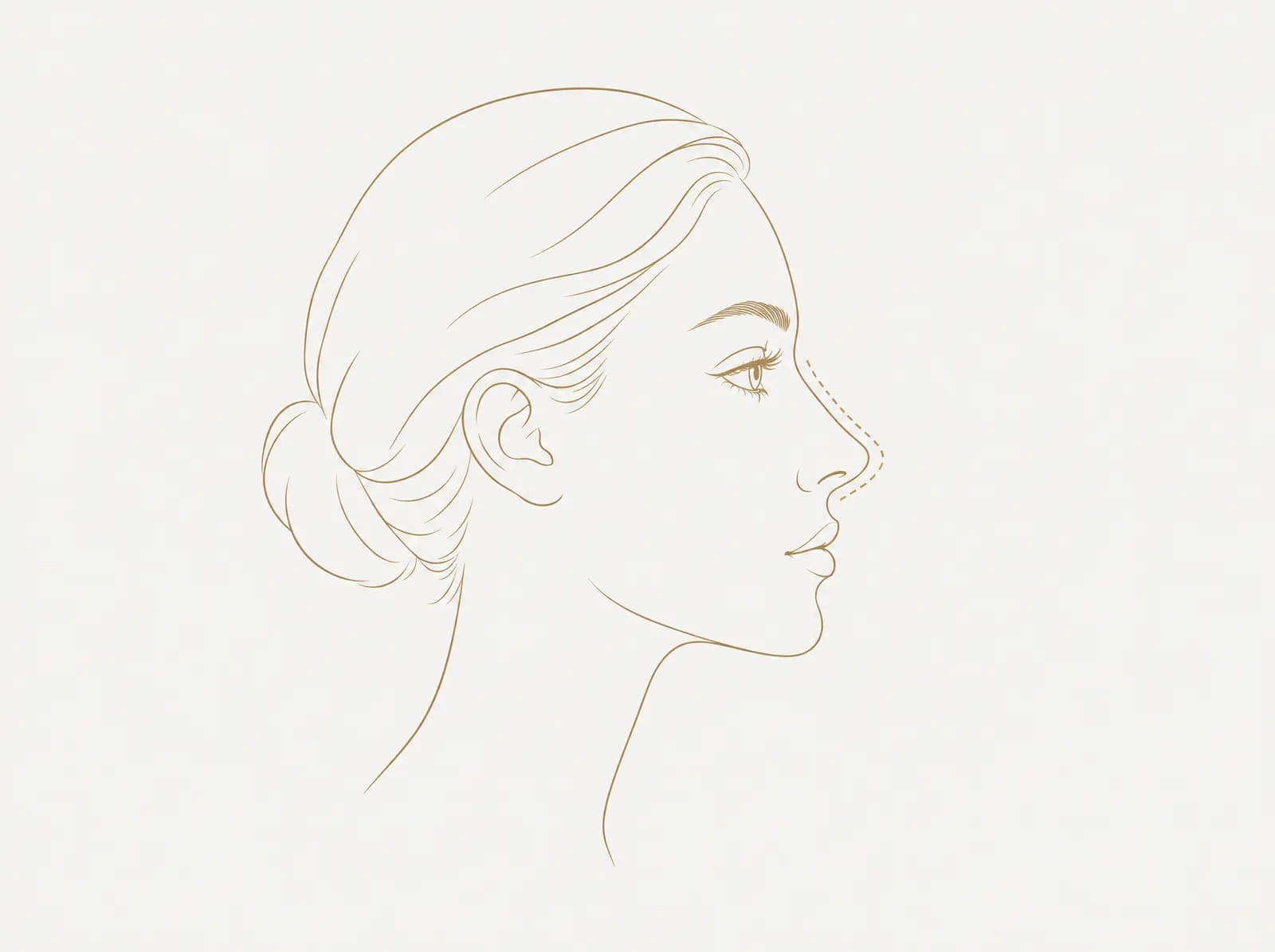
Which method fits you?
In the clinic’s description, the tip is raised and made firm with your own cartilage, and an implant carved to fit raises the bridge. Surgeons call this dorsal augmentation, or augmentation rhinoplasty. What raises the bridge is agreed at consultation, from three main options.
| Method | What happens | Suits | Downtime |
|---|---|---|---|
| Silicone implant with a cartilage tip | A silicone implant is carved to the shape of your bridge and slipped into a pocket over the nasal bone. Septal or ear cartilage lifts and supports the tip. | A low bridge with skin thick enough to cover the implant | Splint and stitches out around day 7 |
| 3D custom implant | Made from a CT scan before surgery rather than carved during it, so it follows your bone. The 3D custom nose implant page explains the design steps. | A bridge with an old injury or uneven bones, which the clinic names as the reason to choose it | The clinic lists stitch removal on day 7 to 10 |
| Your own cartilage for the bridge | Rib cartilage builds the bridge with no implant; ear or septal cartilage gives smaller amounts. | Thin skin, earlier implant problems, or a wish to avoid implants | About 2 hours under sedation or general anesthesia, with a chest or ear wound to heal |
What happens on the day of nose bridge augmentation?
- Consultation and checks. The surgeon studies your face from the front and side, then you agree the method, the implant and the line of the bridge. A 3D CT scan, which the clinic uses for nose surgery, shows the bone and septum inside.
- Anesthesia. The clinic’s standard rhinoplasty figures put you under sedation for roughly 1 to 2 hours, and you leave the same day. Taking rib cartilage for the bridge adds a second wound and more time, so ask how it changes your plan.
- Through a small incision, the lining over the nasal bone is lifted to make room for the implant. Your own cartilage raises the tip, and the implant is trimmed to fit before it goes in.
- The surgeon smooths the line to the shape you agreed, and a splint goes over the bridge before you leave for your hotel.
What is recovery like after nose bridge augmentation?
- Days 1 to 3
- The bridge feels tight under the splint, the nose is blocked and swelling around the eyes is at its peak. Sleep propped up.
- Around day 7
- With an implant plan, the splint and stitches come off. The new bridge looks fuller than it will end up.
- Weeks 2 to 3
- Bruising has mostly faded. The bridge still feels firm when touched.
- Weeks 4 to 6
- Keep heavy glasses off the bridge and avoid knocks until the surgeon says the implant has settled.
- Months 6 to 12
- The final height and line show once the last swelling over the bridge and tip has gone.
How long should you stay in Seoul after nose bridge augmentation?
Allow 7 to 10 days in Seoul. With a bridge implant, the check around day 7 is when the splint and stitches come off and the surgeon checks that the implant sits straight and is well covered under the skin; in our general guidance the flight follows from about day 8. Plans that build the bridge only from your own cartilage can keep the stitches in until day 10, and a rib or ear donor site also needs checking. As after any operation, if you become breathless or have chest pain, get emergency care first, then tell the clinic. If rib cartilage is used, soreness at the chest wound that eases day by day is expected, but chest pain that comes on suddenly or gets worse needs emergency care first, then a call to the clinic. Nose bleeding that is heavy and does not stop needs the same.
What are the risks of nose bridge augmentation?
- An implant that shifts, tilts to one side or sits higher than planned
- Redness or thinning of the skin over the implant, or its edges showing under thin skin, which can end with the implant pushing out
- Infection, which may mean the implant has to come out
- Scar tissue that tightens around an implant (contracture) and can pull the tip upward
- A bridge that looks too high or unnatural for your face, or uneven from side to side
- Swelling and bruising around the eyes, a blocked nose and nosebleeds in the first days, and a bridge that feels tight and numb for some weeks
- With your own cartilage, pain or a scar where it is taken, and cartilage that can warp over time
- With rib cartilage, rarely, air leaking around the lung (pneumothorax)
What affects the cost of nose bridge augmentation in Korea?
Until your bridge has been assessed there is no figure to give, so no nose bridge augmentation price is listed here yet. The quote depends mainly on the material for the bridge (a carved silicone implant, a 3D custom implant or your own cartilage), on how the tip is raised and on any other change, such as narrowing the bones. A patient coordinator answers first, then the surgeon at the partner clinic that fits your case reviews your photos and consults in depth. Implant type, any cartilage donor site and the surgeon’s name all belong on the written quote. Our consultation is free for you, and you pay only the clinic’s own price for treatment.
More questions
How much can a low nose bridge be raised?
It depends on how much your skin can stretch and how thick it is. Raising the bridge further than the skin allows puts tension on it, which makes an implant more likely to show or cause problems. Photos of the height you want help the surgeon tell you what your skin allows.
Is silicone or my own cartilage better for the nose bridge?
Neither suits everyone. Silicone is quick to shape, needs no donor site and can be removed, but it can shift, show or become infected. Your own cartilage avoids an implant, but rib cartilage adds a chest scar and can warp. Your skin, the height you want and any past surgery decide the choice. Our rib cartilage rhinoplasty and rhinoplasty without implants pages cover your own cartilage in more detail.
Is a nose bridge implant permanent?
A silicone implant stays unless it is taken out, and it can be removed or replaced in a later operation if it shifts, becomes infected or you want a different shape. It does not stop the nose from changing with age, so ask how the implant would be checked over the years.
Will a higher bridge make my nose look longer?
It can change how long the nose looks, because raising the bridge starts at the point between the eyes, where the nose meets the forehead. The surgeon balances where the bridge begins with the height of the tip, which is why the tip is usually raised with cartilage in the same operation. Agree on the starting point of the bridge using your profile photos.
Related procedures
Sources
- Complications associated with autologous rib cartilage use in rhinoplasty: a meta-analysis. PubMed, US National Library of Medicine
- Problems Associated with Alloplastic Materials in Rhinoplasty. PubMed Central, US National Library of Medicine
- The current techniques in dorsal augmentation rhinoplasty: a comprehensive review. PubMed Central, US National Library of Medicine
- Current Update in Asian Rhinoplasty. PubMed Central, US National Library of Medicine
- Rhinoplasty Risks and Safety. American Society of Plastic Surgeons
Cases and clinic figures come from our partner clinic, Urban Plastic Surgery. The partnership does not change what we publish about risks and recovery.