Breast reduction in Korea
Breast reduction removes breast tissue, fat and skin and raises the nipple, making heavy breasts smaller and lighter. It suits breasts causing neck or back pain or rashes. Surgery at our partner clinic lasts 4 to 8 hours, depending on breast size, under general anesthesia and without an overnight stay. Plan at least 7 to 10 days in Seoul.
- Surgery time
- 4 to 8 hours, depending on breast sizeUrban Plastic Surgery
- Anesthesia
- General anesthesiaUrban Plastic Surgery
- Time in Seoul
- At least 7 to 10 days in SeoulGeneral guidance
Questions about your own plan? A patient coordinator replies first, free of charge, then connects you with the partner clinic.

Who is a good candidate for breast reduction?
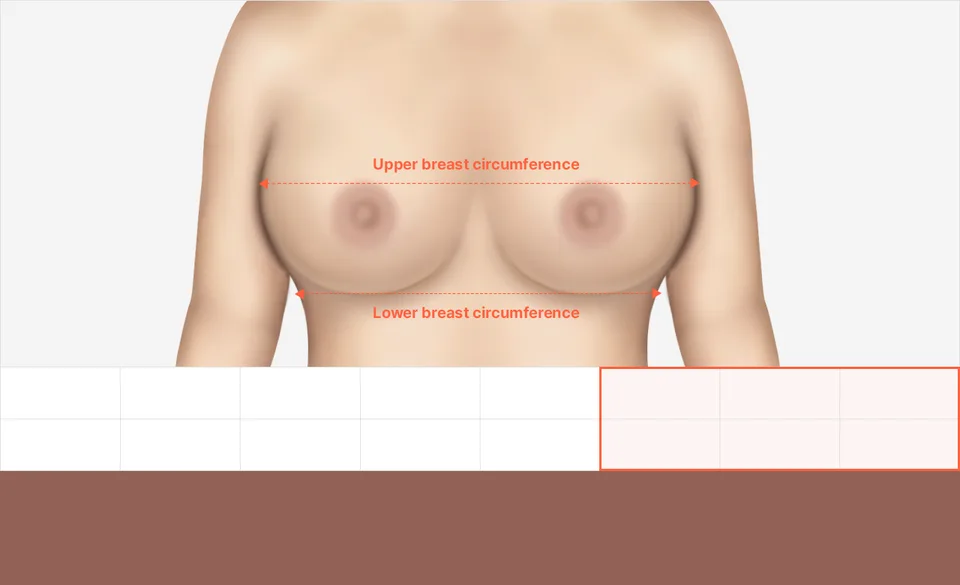
- Your breasts are very large for your frame. The clinic calls it macromastia when the vertical distance from the upper to the lower breast is more than 20 cm and each breast holds more than 400 cc
- The weight of your breasts causes neck, shoulder or back pain, or bra straps dig into your shoulders
- You get rashes or skin irritation in the fold under your breasts
- Your breasts are large and also sag, and you want them smaller and higher
When it may not be the right choice
- You plan to breastfeed in the future. A reduction can make breastfeeding difficult or impossible
- You cannot accept scars on the breast. Every method leaves some
- Your weight is still changing, or you plan a pregnancy soon, since both change the breasts again
- You smoke and cannot stop around the operation, since smoking slows the healing of breast wounds
Which breast reduction incision suits your breasts?
The clinic chooses the pattern from your measurements, breast shape, skin elasticity, where the areola sits and how far the breasts sag. The clinic also notes that whichever pattern is used, a reduction cannot avoid scarring altogether, so the aim is the shortest scar that still gives the size and shape you agreed.
Around the areolaPeriareolar incision
A single cut follows the rim of the areola. Tissue comes out through it, so the scar stays at the areola edge. The clinic also describes little bleeding and a faster recovery with this approach.
Vertical (lollipop)Vertical incision
Sits between the other two patterns. The clinic says it scars less than the anchor pattern, calls it a demanding technique, and warns that the shape soon after surgery can look quite different from the final one.
Moderate to significant reductions, in the clinic’s words.
Anchor (inverted T)Inverted-T incision
Adds a cut along the fold beneath the breast to the cuts around the areola and straight down, so together they form an inverted T. The clinic lists a pleasing shape straight after surgery and fairly consistent results as its strengths, and the largest scar of the three as its main drawback.
Severe enlargement together with sagging, according to the clinic.
Figure: Urban Plastic Surgery’s English breast reduction page, collected 5 October 2026. We rewrote the clinic’s account of each incision in our own words.
Which method fits you?
Surgeons call the operation reduction mammaplasty. Urban Plastic Surgery, our partner clinic, works with three incision patterns. The more tissue and skin that has to come out, the longer the scar.
| Method | What happens | Suits | Downtime |
|---|---|---|---|
| Around the areola | The incision runs only around the edge of the areola. Tissue is removed through it and the skin is drawn in, like closing a purse. | A smaller reduction | The shortest scar of the three; ask the surgeon how healing compares for your plan |
| Vertical (lollipop) | Around the areola plus a line straight down to the fold under the breast. | Moderate or larger reductions | The shape takes longer to settle |
| Anchor (inverted T) | Around the areola, down to the fold, and along the fold. | Large breasts that also sag markedly | The longest scar of the three, which the clinic names as this pattern’s main drawback. Ask how long you should stay. |
What happens on the day of breast reduction?
- Consultation. The surgeon measures your breasts and checks the nipple position, skin and sagging, then agrees the new size and the incision pattern with you.
- Markings are drawn while you stand, then you are put under general anesthesia. Because of the general anesthesia, the clinic asks you to have nothing to eat or drink after midnight the night before, including water, gum, candy and coffee.
- The surgeon removes breast tissue, fat and skin, moves the nipple and areola higher on their blood supply, and shapes what remains. The clinic lists 4 to 8 hours for the operation, depending on breast size.
- Dressings and a support bra go on. The clinic lists no overnight stay. The NHS says drains may be fitted and removed after a day or two, so ask whether drains are used in your plan.
What is recovery like after breast reduction?
- Days 1 to 3
- Expect soreness and tightness across the breasts. Keep the support bra on, rest, and leave lifting and overhead reaching to others.
- Days 3 to 4
- The clinic lists 3 to 4 days before light activity. Keep lifting and reaching overhead to a minimum.
- Days 7 to 8
- Check-up at the clinic for the incisions and nipples. Ask the surgeon whether it is safe to fly after this.
- Week 2
- The clinic’s page lists about 2 weeks for stitch removal. Confirm the plan for your own operation; if you fly before this visit, agree beforehand who will remove the stitches.
- Weeks 2 to 6
- Bruising and swelling ease, though the breasts can feel firm or lumpy. Avoid heavy lifting and strenuous exercise until the surgeon allows it.
- From month 3
- Swelling settles and the shape relaxes. Scars start red and lighten gradually over many months.
How long should you stay in Seoul after breast reduction?
The stay leaves time for the day 7 to 8 check of the incisions and nipples, so plan at least 7 to 10 days in Seoul and confirm the length of stay for your own plan before you book. The clinic lists no overnight stay. Drains can add days to your time in Seoul, and if your plan is a longer operation, ask the surgeon whether you should spend the first night at the clinic. Whether you can fly is decided at the surgeon’s review a week or so after surgery, not before. With stitches due out at about 2 weeks, agree who will remove them and which of the clinic’s 3 to 4 visits happen in Seoul. On the plane, walk and keep moving your legs. If you become breathless, have chest pain, or one leg becomes painful and swollen, get emergency care first, then tell the clinic, and do not fly until a doctor says it is safe. If one side swells quickly and becomes more painful, especially soon after surgery, contact the clinic straight away; if you cannot reach the clinic, get emergency care. A nipple that turns dark or cold, or a wound that opens, also needs a call to the clinic at once. If a treated area blisters, or you see spreading redness, heat or fever, contact the clinic straight away.
What are the risks of breast reduction?
- Permanent scars: around the areola for every method, plus a vertical line and a line in the crease for larger reductions. They can thicken or widen
- Loss or change of nipple and breast sensation, which may improve over time or may be lasting
- Breastfeeding may become difficult or impossible
- Loss of blood supply to the moved nipple, which can cause part or all of the nipple and areola to die
- Wound breakdown where incisions meet, uneven breasts or shape irregularities that may need revision
- Bleeding (hematoma), infection, fluid collection or firm lumps of damaged fat
- Deep vein thrombosis and the risks of anesthesia. A long operation followed by a long flight raises the chance of a clot
What affects the cost of breast reduction in Korea?
A breast reduction quote depends on how much tissue is removed, the incision pattern, and the anesthesia. This page has no price yet; the clinic quotes from your photos and measurements. A patient coordinator answers first, then the surgeon at the partner clinic that fits your case reviews your photos and consults in depth. The written quote should name the surgeon and the incision pattern, say whether drains are included, and cover follow-up visits and stitch removal. Our consultation is free for you, and you pay only the clinic’s own price for treatment.
More questions
What scar does a breast reduction leave?
It depends on the pattern. A modest reduction can leave a scar only around the areola. A vertical or lollipop breast reduction adds a line down to the fold. A large reduction also adds a scar along the fold, which gives the anchor shape. Breast reduction scars are permanent and fade slowly.
Can I breastfeed after a breast reduction?
It may be harder, or not possible. Moving the nipple and removing tissue can cut milk ducts, and the effect differs from person to person. If you want to breastfeed in the future, tell the surgeon, since it may change the method or the timing.
How long is recovery from breast reduction?
The NHS says full recovery can take 2 to 6 weeks and that swelling can last around three months. Light activity comes back sooner: the clinic lists 3 to 4 days. Ask the surgeon for a timeline for your own operation, including when you can lift and exercise.
Does a breast reduction also lift the breasts?
Yes. A reduction raises the nipple and reshapes the breast as it removes tissue, so the breasts end up higher as well as smaller. If your size is right but the breasts sag, a breast lift alone may be enough.
Related procedures
Sources
- Clinic figures as published by Urban Plastic Surgery, collected October 8, 2026. Your surgeon confirms your own plan.
- Breast reduction (female). NHS
- Breast Reduction Risks and Safety. American Society of Plastic Surgeons
- Breast Reduction. StatPearls, NCBI Bookshelf
- Unfavourable results following reduction mammoplasty. PubMed Central, US National Library of Medicine
Cases and clinic figures come from our partner clinic, Urban Plastic Surgery. The partnership does not change what we publish about risks and recovery.