Canthoplasty revision in Korea
Canthoplasty revision corrects eye corners left over-opened, under-opened, scarred, uneven or closed again after earlier inner or outer corner surgery. An epicanthoplasty reversal rebuilds the fold at the inner corner. Surgery takes about 1 hour under local anesthesia, with no hospital stay. Stitches come out on day 5 or 6, and most people plan 7 to 10 days in Seoul.
Who is a good candidate for canthoplasty revision?
- Your inner corners look over-opened after epicanthoplasty, with too much of the pink tissue at the corner showing or a sharp, harsh look
- A scar at the inner or outer corner shows clearly, has thickened or pulls the skin
- The corners of your two eyes look different, or their shape is not what you expected
- An outer corner opened by lateral canthoplasty has closed up again, or the first surgery made little difference
- Your first inner corner surgery opened less than you wanted, and a small further opening, rather than a reversal, is being considered
When it may not be the right choice
- Your corner surgery was recent and the area is still swollen or red. Most surgeons wait several months, until the scar has softened, before operating again
- You expect the corner to look as if it had never been operated on. Scar tissue limits what a revision can restore
- Your eyes are often dry or sore and this has not been treated, or you have an eye infection now
Which method fits you?
A corner revision is planned around what the first surgery changed. Bring photos from before that surgery and any notes on the method used. These are the general approaches described in the medical literature; ask which one the surgeon suggests for your eyes.
| Method | What happens | Suits | Downtime |
|---|---|---|---|
| Inner corner restoration (epicanthoplasty reversal) | The skin at the inner corner is lifted and moved back toward the nose, or rearranged with small flaps such as a reverse Z-plasty, so an epicanthal fold covers the inner corner again. | An over-opened inner corner, too much pink tissue showing, or a harsh look after epicanthoplasty | Stitches out on day 5 or 6; most people are back to their routine within 1 to 2 weeks |
| Scar correction at the corner | The old scar is cut out or released, and the skin is closed again along a line that lies better. It is often done together with restoring the fold. | A thick, dark or visible scar, or one that pulls the corner out of shape | Stitches out on day 5 or 6. The new scar is pink for a few months |
| Outer corner repair or re-opening | If the outer corner has closed up, it can be opened and fixed again. If the lower lid has been pulled down, the corner is reattached higher and the lower lid is supported. | An outer corner that closed up or changed little after lateral canthoplasty, or a lower lid pulled down after outer corner surgery | The same stitch day, though work that supports the lower lid can take longer to settle |
What happens on the day of canthoplasty revision?
- Consultation. The surgeon looks at the scar, the shape of each corner and how well your eyelids close, and asks what was done the first time.
- Local anesthesia numbs the area around the corner, and you stay awake.
- The surgeon releases the old scar and moves or rearranges the skin at the corner, then closes it with fine stitches. This takes about 1 hour.
- After a short rest you leave on your own, as only the corners were numbed. The first look at the corner shape is on the stitch day, and the 2 to 3 follow-up visits the clinic lists are spread over your stay.
What is recovery like after canthoplasty revision?
- Days 1 to 3
- The corners are swollen and may bruise, and the stitch line can feel tight. Keep it clean as the clinic shows you, and do not rub your eyes.
- Days 5 to 6
- Stitches come out at the clinic. The corner still looks red and a little puffy.
- Weeks 1 to 2
- Most people return to daily life. Ask before wearing eye makeup near the corner.
- Months 1 to 6
- The scar is pink and firm at first, then slowly softens and fades. The corner shape is judged after several months, once the scar has relaxed.
How long should you stay in Seoul after canthoplasty revision?
Allow 7 to 10 days in Seoul for canthoplasty revision. Stitches at the corner come out on day 5 or 6, and the corners are checked again at the follow-up visits, so book the flight for day 7 or later. Some redness at the corner can still show on the way home. If a double eyelid revision is done in the same operation, plan around its stitch day as well. Hold off on saunas, swimming and alcohol for two weeks.
What are the risks of canthoplasty revision?
- Swelling, redness and bruising at the corners, which usually settle over 1 to 2 weeks
- A scar that stays visible, thickens or darkens. Scars at the inner corner can do this, and a small scar revision is sometimes needed later
- Corners that still look uneven, or a fold restored more or less than planned
- Scar tissue pulling the corner again, so it rounds off or closes up
- After repair of the outer corner, a lower lid that sits too low, shows white below the iris (scleral show) or rolls outward (ectropion)
- Dry, watery or irritated eyes, or an infection at the wound
- Rarely, bleeding or a change in vision. If your sight changes suddenly or the eye becomes very painful, get emergency care first and let the clinic know afterwards
What affects the cost of canthoplasty revision in Korea?
There is no canthoplasty revision price here yet. The clinic quotes after it sees photos of your eyes, and photos from before your first corner surgery help it judge what can be restored. The quote depends on how many corners are treated, whether the inner fold is rebuilt or the outer corner repaired, how much scar tissue there is, and whether a double eyelid revision is added. Make sure the written quote names the surgeon, and ask whether it covers scar release, any lower lid support, the follow-up visits and a later small scar revision if one is needed.
Cases from the clinic
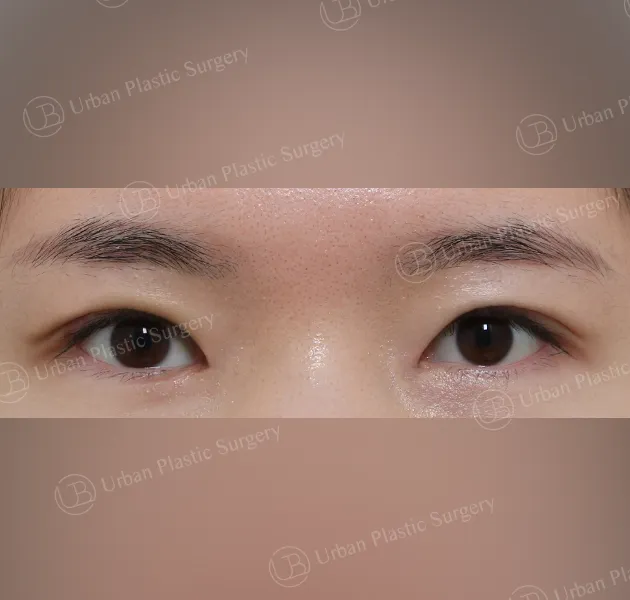
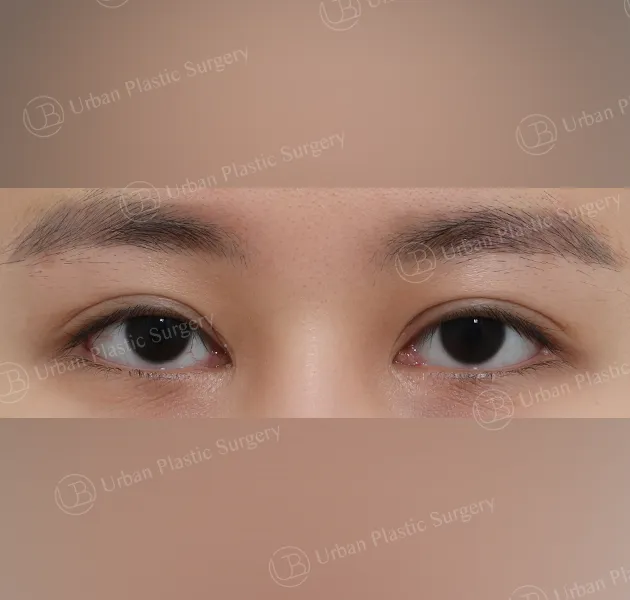
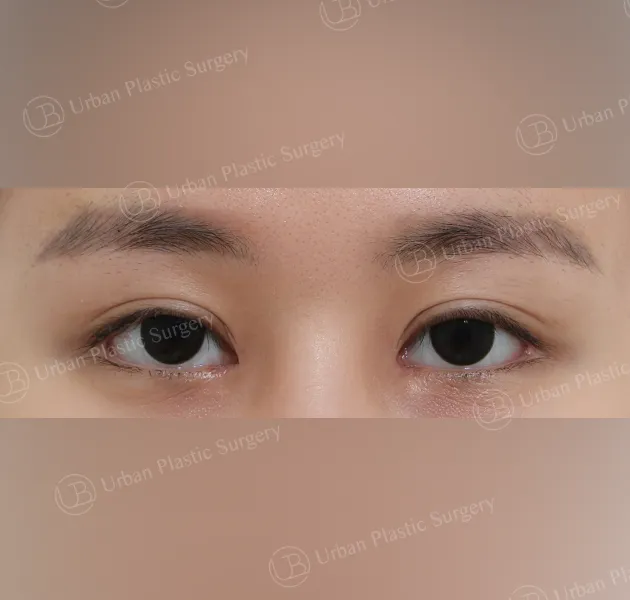
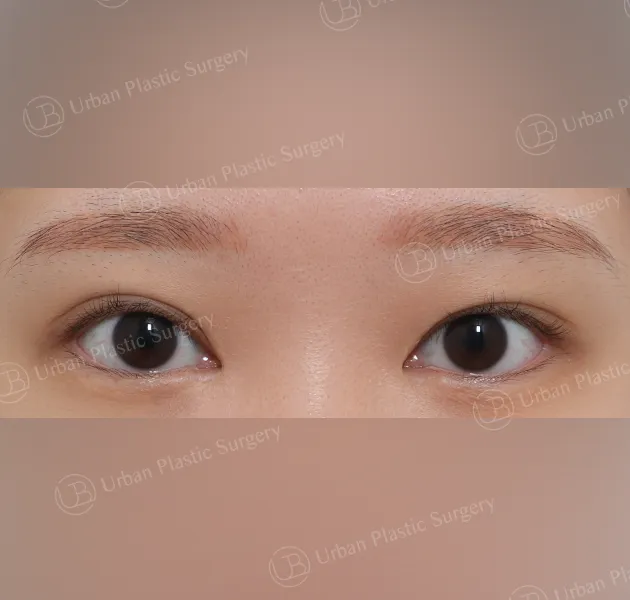
Before and after photos from Urban Plastic Surgery, shown with the patient’s consent, as the clinic provided them and resized for the web. Results differ from person to person, and the risks above apply to every case.
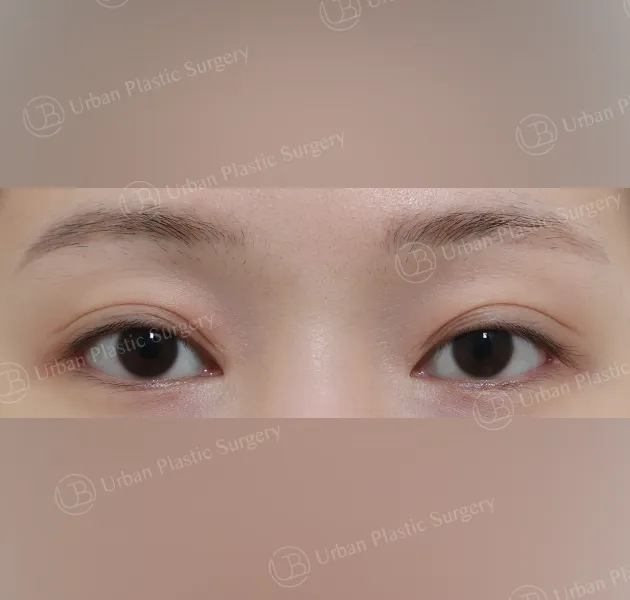
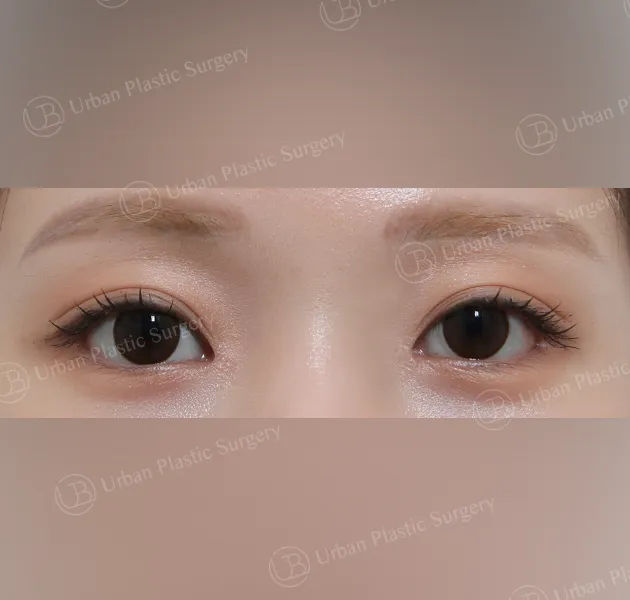
Case cUkidEyes
- Inner corner reversal
Urban Plastic Surgery · consent on file
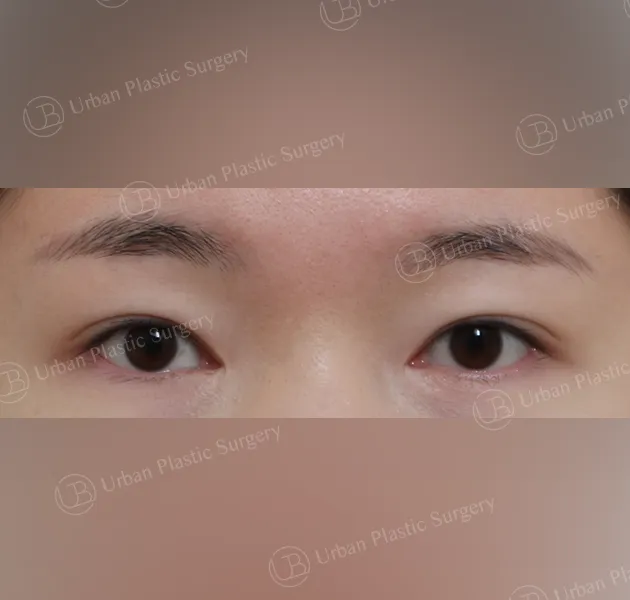
Case NZqMFEyes
- Inner corner reversal
Urban Plastic Surgery · consent on file
Case 3AkvMEyes
- Inner corner reversal
Urban Plastic Surgery · consent on file
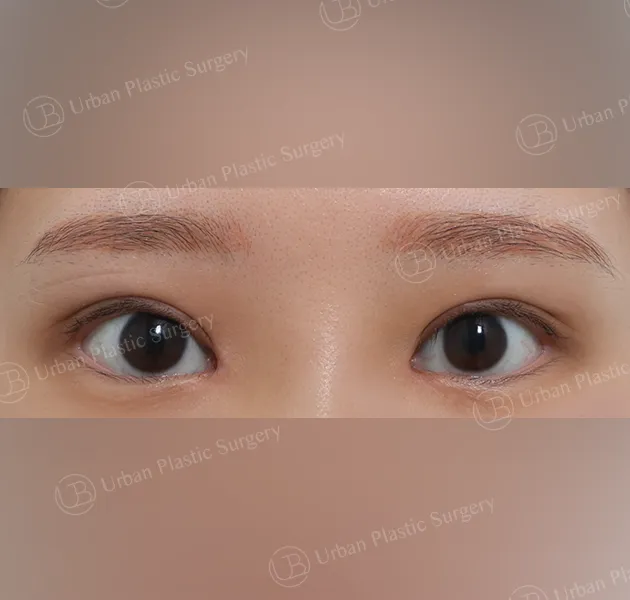
Case 6cg3xEyes
- Inner corner reversal
Urban Plastic Surgery · consent on file
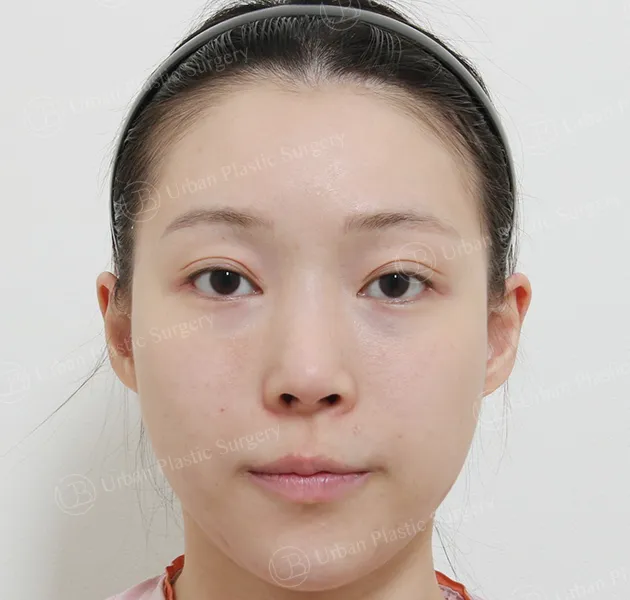

Case L3oT4Eyes · Nose
- Eyes
- Inner corner reversal
- Outer corner (lateral canthoplasty)
- Under-eye fat repositioning
Combined with Nose revision, Bridge, Tip, Nostril reduction
Urban Plastic Surgery · consent on file
More questions
Can epicanthoplasty be reversed?
Often, at least in part. The surgeon lifts the skin at the inner corner and moves it back to rebuild a fold, with methods such as reverse skin redraping or a reverse Z-plasty. How much can be restored depends on the skin left and on how the first surgery was done.
How long should I wait after my first eye corner surgery?
Most surgeons wait until the swelling and redness have gone and the scar has softened, which usually takes several months. An urgent problem, such as a wound that has opened or an infection, is treated sooner. The surgeon sets the timing after examining your eyes.
Will canthoplasty revision leave a new scar?
Yes. The surgeon usually places it along the edge of the corner, where it is harder to see. It looks pink at first and fades over months. In some people scars at the inner corner thicken or darken for a while.
Can I fix my eye corners and my double eyelids in one operation?
Often, yes. A corner revision can be combined with a double eyelid revision. A combined plan can mean more swelling and a longer recovery, so ask how it fits into 7 to 10 days in Seoul.
Related procedures
Sources
- Clinic figures as published by Urban Plastic Surgery, collected October 3, 2026. Your surgeon confirms your own plan.
- Revisional Medial Epicanthoplasty Using Reverse Z-Plasty Technique. PubMed, US National Library of Medicine
- Reoperation of epicanthal reconstruction using a modified reverse skin-redraping method. PubMed Central, US National Library of Medicine
- Restoration of the Lateral Canthus and Stabilization of the Lower Eyelid After Failed Esthetic Lateral Canthoplasty. PubMed, US National Library of Medicine
- Canthoplasty. EyeWiki, American Academy of Ophthalmology
Cases and clinic figures come from our partner clinic, Urban Plastic Surgery. The partnership does not change what we publish about risks and recovery.