Men
Hair transplant in Korea
A hair transplant moves hair follicles from the back of your head to thinning areas, such as a receding hairline or the crown. It suits pattern hair loss with enough donor hair to spare. At our partner clinic it takes about 4 hours under local anesthesia, with no hospital stay; plan at least 3 days in Seoul.
Who is a good candidate for a hair transplant?
- Your hairline is receding at the temples in an M shape, one of the three patterns the clinic lists
- Hair is thinning in a round patch at the crown (an O shape), the second of the three patterns the clinic lists
- You have both, which the clinic notes calls for a large transplant, and the back of your head still has plenty of hair
- You understand that the grafts take months to grow and that the result builds slowly
When it may not be the right choice
- The back and sides of your head have too little hair to spare. Every graft comes from this donor area
- Your hair loss is sudden, patchy or not yet explained. Ask a doctor to find the cause first
- You expect surgery to stop hair loss. It moves hair; the hair you still have can keep thinning around the grafts
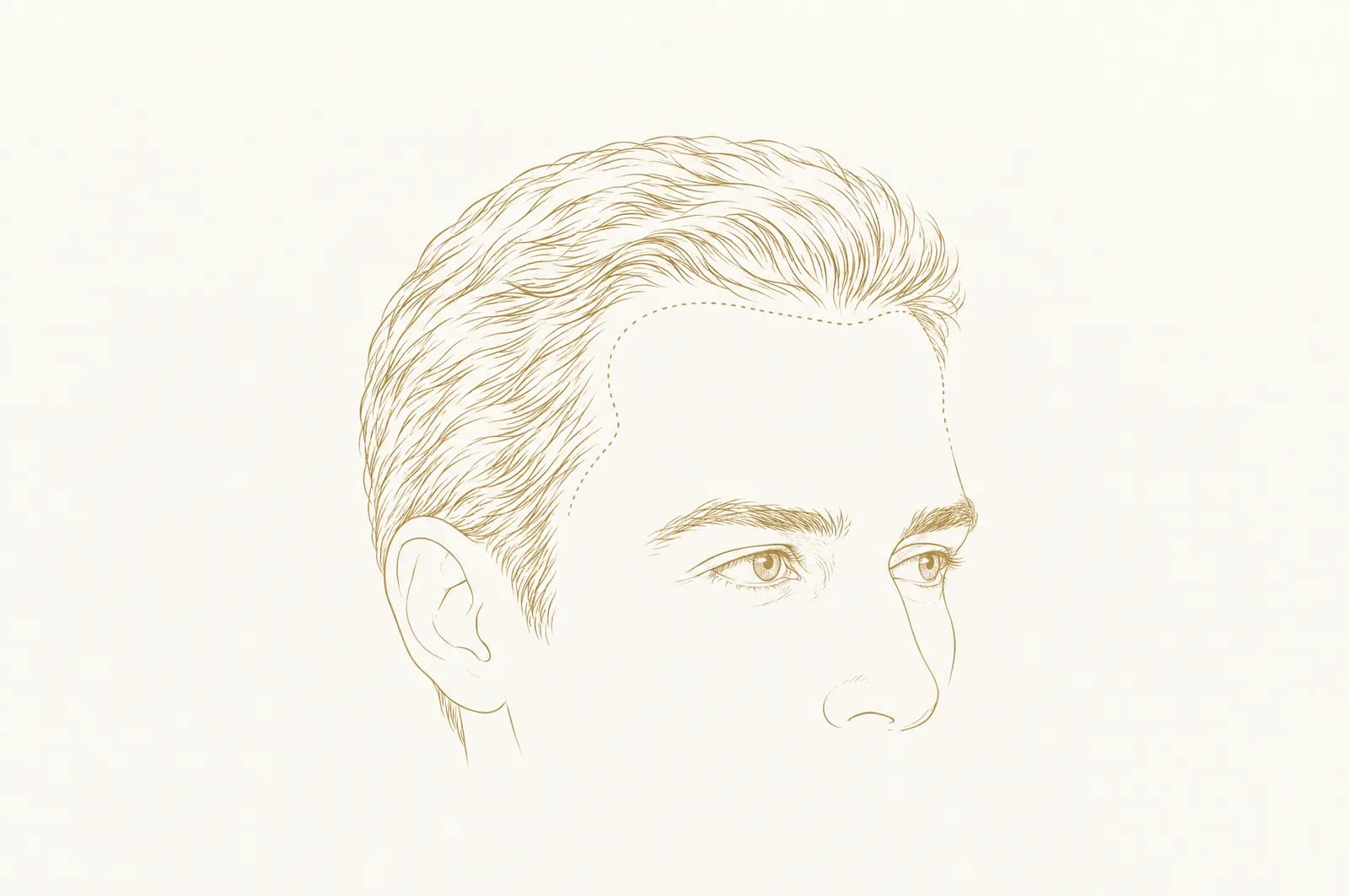
Which method fits you?
The grafts always come from the back of the head. The clinic offers both ways of taking them and says it does not stick to one, because each has advantages and drawbacks; it recommends one after the consultation.
| Method | What happens | Suits | Downtime |
|---|---|---|---|
| Single follicles (FUE) | Follicles are taken out one at a time with a tiny punch, leaving many small dot-like wounds that heal on their own. | You want to avoid a line scar and can accept small white dot scars spread over the donor area | ASPS describes it as less invasive, with a quicker recovery |
| Strip method (FUT) | A thin strip of scalp is cut from the back of the head and divided into grafts, and the wound is stitched closed. | A donor area where your surgeon judges a strip to be the better source; ask why | A line scar at the back of the head; stitches close the strip wound, and the clinic lists stitch removal at about 10 to 14 days |
What happens on the day of a hair transplant?
- Consultation and design. The surgeon looks at your pattern of hair loss and draws a hairline that suits the shape of your face, then agrees how the grafts will be taken.
- Local anesthesia numbs the back of the head and the area to be filled. You stay awake.
- Grafts are taken from the back of the head, as a strip or one follicle at a time, and separated into small units.
- Each graft is placed in the thinning area, matching the angle and direction of your own hair and spacing the grafts for density. The clinic lists about 4 hours in total, and you leave the same day.
What is recovery like after a hair transplant?
- Days 1 to 3
- The scalp is tender and small scabs form over the grafts. Follow the clinic’s instructions on washing your hair and how to sleep.
- About day 3
- Most people are able to go back to work around now, according to the NHS.
- Days 10 to 14
- If a strip was taken, the stitches at the back of the head come out around now, in line with the clinic’s timing.
- About 6 months
- New hair usually starts to appear in the grafted area.
- Months 12 to 18
- The full result shows by now. These timings follow NHS guidance.
How long should you stay in Seoul after a hair transplant?
Most people return to work about 3 days after a hair transplant, according to the NHS, so plan at least 3 days in Seoul after the operation. The clinic lists 1 to 2 follow-up visits; ask when they fall and book the flight after them. If a strip is taken, the stitches come out at about 10 to 14 days, so either stay that long or arrange their removal at home before you travel. Tell the clinic about spreading redness, pus or a fever. If you become breathless or have chest pain, get emergency care first, then tell the clinic.
What are the risks of a hair transplant?
- Scars where the grafts were taken: a line scar after the strip method, or small white dot scars after single-follicle harvesting. Neither method avoids scarring
- Bleeding and infection at the back of the head or in the grafted area
- Numbness or tingling of the scalp, reported more often after the strip method
- Inflamed follicles (folliculitis) and small cysts in the grafted area
- Grafts that grow poorly, a patchy or unnatural look, or a visibly thin donor area if too many follicles are taken
- Shedding of hair in or around the grafted area in the weeks after surgery (shock loss). Ask the clinic what to expect
- Ongoing loss of your own hair around the grafts, which can change the look of the result over time
What affects the cost of a hair transplant in Korea?
A hair transplant quote mostly follows the size of the area to cover, the number of grafts that takes, and whether the strip or single-follicle method is used. We do not list hair transplant prices yet. A patient coordinator answers first, then the surgeon at the partner clinic that fits your case reviews your photos and consults in depth. The quote should state the number of grafts, the method, the surgeon’s name and how many follow-up visits are planned. Our consultation is free for you, and you pay only the clinic’s own price for treatment.
More questions
How long does a hair transplant take?
The clinic lists about 4 hours under local anesthesia, and you go home the same day. A larger session, such as a receding hairline together with a thin crown, can take longer, so ask about your own plan.
When will I see results after a hair transplant?
Slowly. New hair usually starts to appear after about 6 months, and the full result shows at 12 to 18 months, according to the NHS. Plan photos and any events with that timeline in mind.
Is FUE better than the strip method?
Not always. ASPS describes FUE as less invasive, with a quicker recovery and less scarring, while the strip method is still used and has its own benefits. The clinic chooses between them with you after the consultation.
Does a hair transplant leave scars?
Yes, at the back of the head. The strip method leaves a fine line, and FUE leaves many small white dots. Ask how visible they may be with the haircut you usually wear.
Related procedures
Sources
- Clinic figures as published by Urban Plastic Surgery, collected October 3, 2026. Your surgeon confirms your own plan.
- Hair Transplantation and Restoration. American Society of Plastic Surgeons
- Hair Transplant Risks and Safety. American Society of Plastic Surgeons
- Hair transplant. NHS
- Complications of Hair Transplant Procedures: Causes and Management. PubMed Central, US National Library of Medicine
- Follicular Unit Extraction (FUE) Hair Transplant: Curves Ahead. PubMed Central, US National Library of Medicine
Cases and clinic figures come from our partner clinic, Urban Plastic Surgery. The partnership does not change what we publish about risks and recovery.